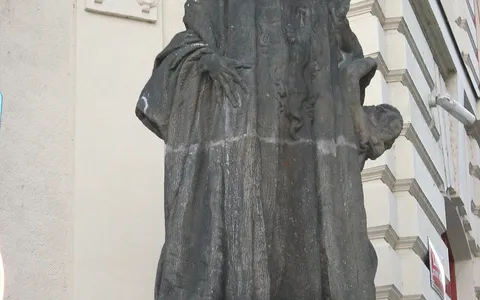
Rabbi Moshe ben Maimon, the Rambam (Maimonides): biography, works and legacy
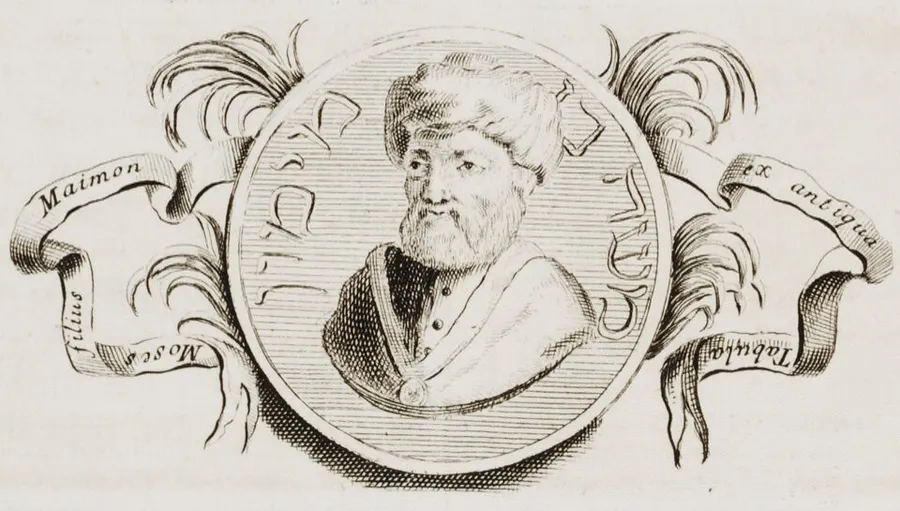
Rabbi Moshe ben Maimon (משה בן מימון), known by the acronym Rambam and as Maimonides, was a rabbi, codifier of the law, philosopher and physician. He was born in Córdoba and died in Fustat (today part of Cairo) on the 20th of Tevet 4965 (December 12, 1204). His Mishneh Torah and his Guide for the Perplexed are among the most influential works in Jewish history.
Quick facts
| Name | Rabbi Moshe ben Maimon. Acronym: Rambam (הרמב״ם). Maimonides |
| Born | In Córdoba, around 1135 or 1138 (sources give both) |
| Died | 20 Tevet 4965 (December 12, 1204), in Fustat |
| Father | Rabbi Maimon ben Yosef, rabbinic judge in Córdoba |
| Main works | Mishneh Torah, Guide for the Perplexed, Commentary on the Mishnah |
Córdoba and exile
He studied Torah with his father and from his youth was interested in science and Greek philosophy, which he read in Arabic translations. In 1148 the Almohads took Córdoba, and the Jews lost the protection they had enjoyed: they had to choose between conversion, martyrdom or exile. His family chose exile.
For about ten years they moved around the south of the Peninsula and North Africa, until settling in Fez. In those years he wrote his Commentary on the Mishnah, around 1166–1168.
The Land of Israel and Egypt
He arrived in Acre on May 16, 1165 with his father and his brother, and stayed about five months. In October he visited Jerusalem, including the Temple Mount, and then the Cave of the Patriarchs in Hebron.
Around 1168 he settled in Fustat. A tradition says he lived earlier in Alexandria and moved in 1171; that date is uncertain.
His brother’s shipwreck
The family entrusted their savings to his brother David, a merchant, to buy goods at the Red Sea port of Aydhab. David sailed for India and drowned, between 1169 and 1177. Maimonides was devastated, as he tells in a letter from the Cairo Genizah.
Nagid and physician
Around 1171 he was appointed head (nagid) of the Jewish community of Egypt. In 1173 he was replaced by Sar Shalom ben Moshe, after a dispute; Maimonides excommunicated him, and he was reinstated in 1195. With the family funds lost, he practiced medicine. He was physician to the qadi al-Fadil and to Saladin, and later to the Ayyubid dynasty. His medical writings describe asthma, diabetes, hepatitis and pneumonia, and stress moderation and a healthy lifestyle. He wrote the Epistle to Yemen in 1172–1174.
His main works
| Work | Date | What it is |
|---|---|---|
| Commentary on the Mishnah | c. 1166–1168 | Includes, in tractate Sanhedrin (chapter 10), the thirteen principles of faith |
| Mishneh Torah | 1170–1180 | Code of Jewish law in fourteen volumes |
| Guide for the Perplexed | 1185–1190 | A philosophical work that seeks to harmonize the Torah with Aristotelian thought |
| Sefer HaMitzvot | Enumeration of the 613 commandments |
Controversies
The Guide was much debated: French rabbis banned it and burned copies in Montpellier. The thirteen principles were criticized by Hasdai Crescas and Yosef Albo, and some scholars believe he himself qualified them, since they do not appear in his later works. From this arose the so-called Maimonidean controversy.
Legacy
The Mishneh Torah retains canonical authority as a codification of Halacha, and his thirteen principles are regarded today as fundamental by many. Two poetic restatements, Ani Ma’amin and Yigdal, appear in many prayer books. He influenced scholastic philosophers such as Albertus Magnus, Thomas Aquinas and Duns Scotus. His family held the office of nagid for four generations, until the end of the 14th century.
His burial
According to tradition he is buried in Tiberias, where his grave is a place of pilgrimage. Medieval sources say that his body was moved there, but there is no contemporary proof of that transfer.
Timeline
| Date | Event |
|---|---|
| c. 1135 or 1138 | Born in Córdoba |
| 1148 | The Almohads take Córdoba; the family goes into exile |
| 1165 | Arrives in Acre and visits Jerusalem and Hebron |
| c. 1166–1168 | Commentary on the Mishnah |
| c. 1168 | Settles in Fustat |
| 1170–1180 | Mishneh Torah |
| 1171 | Appointed nagid (approximate date) |
| 1185–1190 | Guide for the Perplexed |
| 1195 | Reinstated as nagid |
| 1204 | Dies in Fustat, on 20 Tevet |
Frequently asked questions
What does Rambam mean?
It is the acronym of Rabbi Moshe ben Maimon (רמב״ם). Maimonides is his name in Greek.
What are the thirteen principles of faith?
A formulation of the foundations of the Jewish faith, included in his commentary on the Mishnah, in tractate Sanhedrin.
Was he a physician?
Yes. He was a court physician to Saladin and to the Ayyubid dynasty.
What is his most important work?
The Mishneh Torah, his code of law, and the Guide for the Perplexed, his philosophical work.
Sources
- Maimonides, reference article (English Wikipedia) and the sources it cites