Rabbi Saadia Gaon (882–942): biography, works and legacy
Rabbi Saadia ben Yosef (סעדיה גאון), Saadia Gaon, was the gaon of the academy of Sura, a philosopher, grammarian, translator of the Torah into Arabic and a great defender of rabbinic Judaism against the Karaites. Tradition gives 892 as the year of his birth in Dilaz, in the Fayum (Egypt), although 882 is preferred today. He died in Sura, in present-day Iraq, on May 16, 942.
Quick facts
| Name | Rabbi Saadia ben Yosef al-Fayyumi |
| Born | 892 according to tradition, 882 according to modern studies; Dilaz, Fayum |
| Died | May 16, 942, in Sura |
| Office | Gaon of Sura, from 928 |
| Works | Emunot VeDeot, the Tafsir, his Siddur, Sefer HaGalui |
Youth
He claimed descent from the family of Shelah, son of Judah, and from Rabbi Chanina ben Dosa, and he named his son Dosa; these are claims of his own that have not been verified. At about twenty he began the Hebrew dictionary Agron, and at twenty-three he wrote a polemic against the followers of Anan ben David (the Karaites), thus beginning his anti-Karaite activity. In 915 he settled in the Land of Israel, where he studied Tiberian Hebrew with Abu Kathir Yahya al-Katib.
Babylonia and the calendar dispute
In 926 he settled in Babylonia, where he became attached to the academy of Sura. He opposed, in letters and in the Sefer HaMoadim, the gaon Aharon ben Meir, of the Land of Israel, whose calendar proposal would have divided the celebration of Passover between Babylonia and the Land of Israel. He supported the exilarch David ben Zakkai, and the dispute was resolved, according to the source, in Saadia’s favor.
Gaon of Sura
In 928 the exilarch David ben Zakkai appointed him gaon of Sura, despite objections that never before had a foreigner held the post. He refused to sign a sentence that he considered unjust. After a violent incident with the exilarch’s son, the two excommunicated each other and declared each other deposed. In 930 David appointed another gaon in his place, and Saadia appointed David’s brother, Hasan, as exilarch; Hasan fled and died in exile. Around 937 they reconciled through intermediaries and Saadia was reinstated. David died around 940.
Works
- Emunot VeDeot (“Book of Beliefs and Opinions”): composed in 933 and revised later, it is regarded as the first systematic attempt to unite Jewish theology with philosophy.
- Tafsir: a translation and commentary of the Torah into Judeo-Arabic, widely used especially among the Jews of Yemen. Abraham ibn Ezra criticized some identifications.
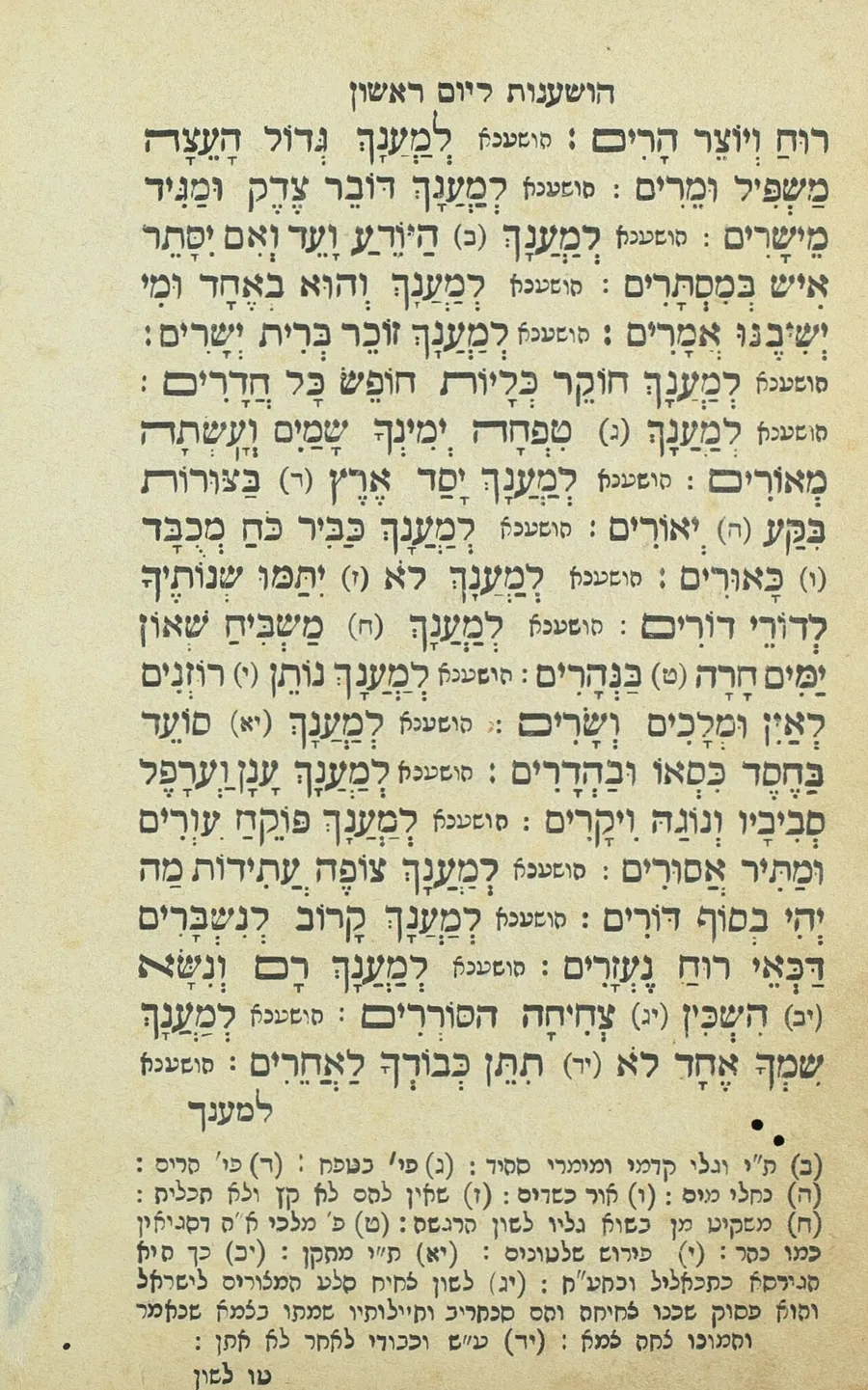
- Siddur: prayer texts with commentary in Arabic and synagogue poetry, with the Azharot on the 613 commandments.
- Sefer HaGalui: an autobiographical and apologetic work, in Hebrew and Arabic, in defense of his conduct against David and Aharon ibn Sargado; only fragments survive.
- Anti-Karaite polemic: Kitab al-Tamyiz (926) and others, some preserved only through quotations.
- Others: a commentary on the Sefer Yetzirah, Hebrew linguistics and responsa.
His significance
He is credited with founding a rational and philological school of biblical exegesis and is regarded as one of the founders of Hebrew grammar and lexicography. His synthesis of Jewish tradition and rational philosophy marked later Jewish thought; before him, only Philo had attempted something similar. He was one of the great defenders of rabbinic Judaism, and Yemenite liturgy draws largely on his works.
His death
He died in Sura on May 16, 942, after suffering recurring illnesses which the source describes as melancholy. His age is disputed: sixty, according to one version, and fifty, according to Ibn Daud. The Wikipedia entry gives the old cemetery of Safed as his burial place, a fact that is neither developed nor confirmed in the text.
Frequently asked questions
What is a gaon?
The title of the heads of the great academies of Babylonia, Sura and Pumbedita, between the 6th and 11th centuries.
Why is he important?
For his philosophical work, his translation of the Torah into Arabic and his defense of rabbinic Judaism against the Karaites.
When was he born?
Around 892, according to tradition, or 882, according to modern studies.
Sources
- Saadia Gaon, reference article (English Wikipedia) and the sources it cites