
The Sefer HaBahir: what it is, origin and content
Read aloud with your device’s voice.
The Sefer HaBahir (ספר הבהיר), “Book of Brightness” or “of Illumination,” is one of the earliest works of Kabbalah. It is anonymous and tradition attributes it to the 1st-century sage Rabbi Nechunya ben HaKanah, because it begins with the words “Rabbi Nechunya ben HaKanah said.”
Quick facts
| Title | Sefer HaBahir, from Job 37:21 |
| Traditional attribution | Rabbi Nechunya ben HaKanah (1st century) |
| Origin according to scholars | Provence, late 12th century (around 1174) |
| Oldest manuscript | 1298 |
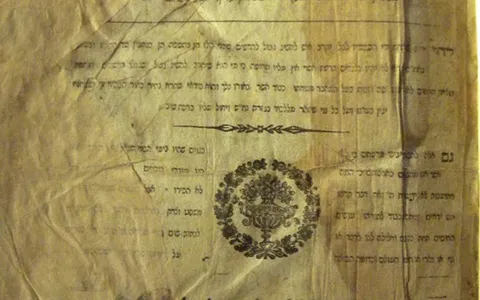
| First known printed edition | Amsterdam, 1651 |
The name and the attribution
It was called Sefer HaBahir from its opening verse, Job 37:21. The Ramban was among the first to cite it, under the name Midrash of Rabbi Nechunya ben HaKanah. Scholars regard it as pseudepigraphic, composed in Provence in the late 12th century. Ronit Meroz holds that some elements are from the 10th century, in Babylonia, and that others were written in 12th-century Provence. It is thought that part of the text adapts an older work, Sefer Raza Rabba, preserved only in quotations.
Structure
It is a midrash on the first chapters of Genesis, written as a dialogue between a master and his disciples. It is usually divided into five sections. The source gives different figures for the paragraphs: sixty short paragraphs or one hundred and forty passages, and two hundred paragraphs in the form of aphorisms.
Content
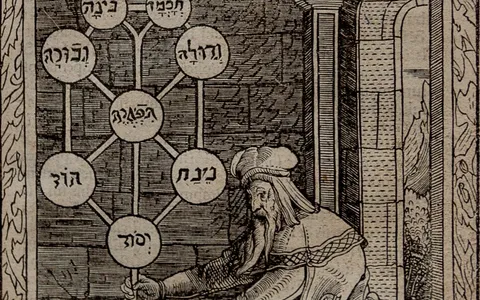
- The sefirot: the word appeared in the Sefer Yetzirah for the ten basic numbers. In the Bahir the concept of the sefirot as divine attributes emanating from G-d appears for the first time. The first is called Or HaGanuz or Keter Elyon, followed by Chochmah and Binah and by the lower seven. See the guide to the Sefer Yetzirah.
- Transmigration: the Bahir uses reincarnation to explain why the righteous suffer and the wicked prosper: “the righteous may have been wicked in previous lives, and the wicked, righteous.”
- Other themes: the mystical meaning of the letters, the cantillation marks, the vowels and the magical uses of the holy names.
The academic debate
Scholars have discussed the relation of the Bahir to Gnosticism, because of the similarity between its symbolism and the Gnostic theories of “aeons.” It is unknown whether it is historical continuity or an independent development.
Frequently asked questions
Who wrote the Bahir?
It is anonymous. Tradition attributes it to Rabbi Nechunya ben HaKanah and scholars place it in 12th-century Provence.
Why is it called “Bahir”?
After the first verse it cites, Job 37:21.
When was it printed?
The oldest known edition is from Amsterdam, 1651.
News from Ancient Gate Press
We will let you know about new books, samples and news from the press. No spam.
Sources
- Sefer ha-Bahir, reference article (English Wikipedia) and the sources it cites
- Cross-checking: Bahir (Wikipedia); catalogs of the Amsterdam 1651 edition