
Chovot HaLevavot by Rabbeinu Bachya ibn Paquda: what it is and structure
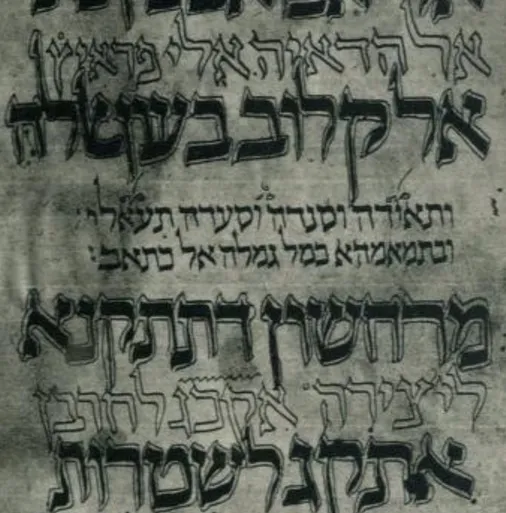
Chovot HaLevavot (חובות הלבבות), “Duties of the Hearts,” is the main work of Rabbeinu Bachya ibn Paquda, who is believed to have lived in the taifa of Zaragoza, in al-Andalus, in the 11th century. It was written in Judeo-Arabic around 1080, and is a classic work of ethics and spiritual life. It should not be confused with Rabbeinu Bachya ben Asher, a 14th-century commentator on the Torah.
Quick facts
| Author | Rabbeinu Bachya ibn Paquda |
| Written | Around 1080, in Judeo-Arabic |
| Hebrew translation | Rabbi Yehuda ibn Tibbon, between 1161 and 1180 |
| Structure | Ten gates (shaarim) |
| Another translation | Rabbi Yosef Kafih, 1973 |
The ten gates
Each deals with one of the principles that the author considers central to spiritual life:
- The unity of G-d
- Reflection on creation
- The service of G-d
- Trust (bitachon)
- Sincerity
- Humility
- Repentance
- Self-examination
- Withdrawal from the world
- The love of G-d
Its message
Recognizing G-d as the sole creator is the foundation. The first gate defends the divine unity with philosophical arguments, relying above all on Saadia Gaon and on the tradition of the kalam. Belief must rest on a reasoned conviction, and not on an unexamined faith. Religious life centers on an emotional relationship and on the love of G-d. Halachic worship has value because it disciplines the desires, but true service, says the source, “must be that of the heart.”
Sources and influence
He cites Saadia Gaon, the mutakallimun, the Brethren of Purity and Aristotle’s physics, and he cites the Tanakh and the Talmud constantly. Rabbi Natanel al-Fayyumi, a 12th-century Yemenite philosopher, wrote a work that countered some of his arguments. The work was translated into Judeo-Spanish, Latin, Portuguese, German, Italian and English.
Frequently asked questions
What are “the duties of the hearts”?
The inner obligations: trust, humility, sincerity, love of G-d. The source contrasts them with outward observance.
How many gates does it have?
Ten.
When was it written?
Around 1080, in Judeo-Arabic.
Sources
- Duties of the Heart, reference article (English Wikipedia) and the sources it cites