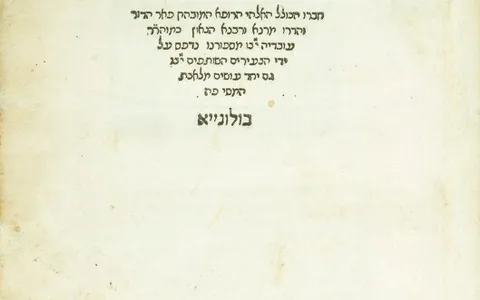
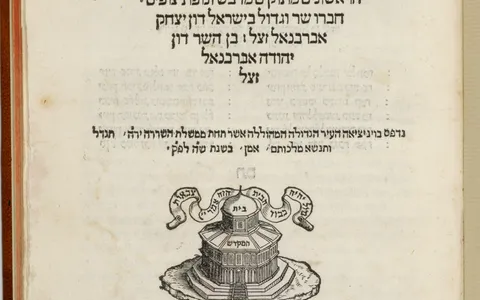
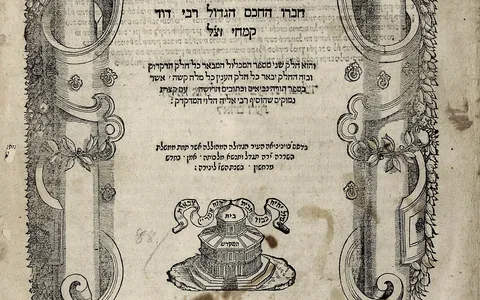
Rabbi Abraham ibn Ezra (c. 1089–1164): biography, works and legacy
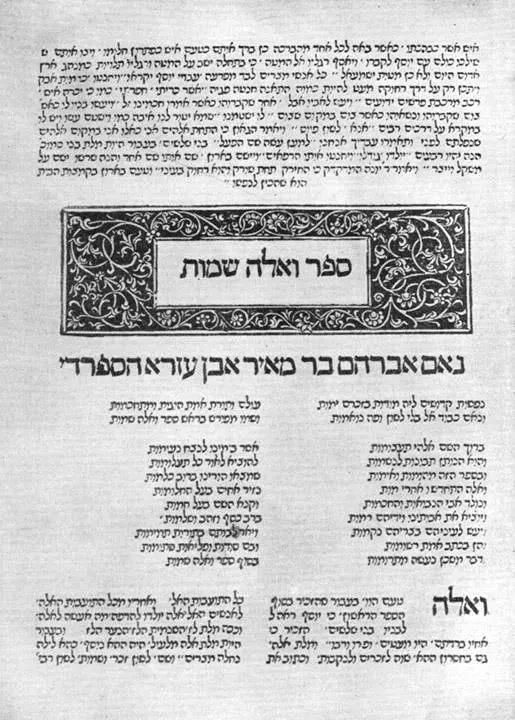
Rabbi Abraham ibn Ezra (אברהם אבן עזרא) was a poet, grammarian, astronomer, philosopher and one of the great commentators on the Torah. He was born around 1089 in Tudela, then under the Muslim taifa of Zaragoza (in present-day Navarre), and died around 1164. The exact date is uncertain: sources range between January 27, 1164 and January 23, 1167.
Quick facts
| Name | Rabbi Abraham ben Meir ibn Ezra |
| Born | Around 1089–1092, in Tudela |
| Died | Around 1164–1167 (sources differ). Where is disputed |
| Fields | Bible commentary, Hebrew grammar, philosophy, astronomy, poetry |
| Main works | Torah commentary, Yesod Mora, Sefer HaEchad, Sefer Moznayim |
A sage of Sepharad
He was born in Tudela and as a young man moved to Córdoba. There he was followed by Rabbi Yehuda Halevi, some fourteen years his senior, with whom he formed a great friendship. Both became travelers around 1137. Halevi died in 1141, and Ibn Ezra went on traveling for some thirty years, until he reached Baghdad.
His family
Little is known of his private life. He wrote that his wife bore him five children, of whom four are believed to have died young. His youngest son, Yitzchak, a poet, converted to Islam in 1140, which deeply grieved Ibn Ezra and inspired many of his later poems.
Years of travel
He wandered through Europe lamenting that he could not find patrons. A rabbinic post in Vienna was not renewed for him, apparently because of his literal approach to the Talmud. He corresponded in verse with Rabbeinu Tam, the great master of pilpul. He wrote a second version of his Bible commentary during his stay in England.
An anecdote attributed to him tells that, with his bad luck, if he sold shrouds no one would die, and if he sold candles the sun would not set. It is a tradition, not a documented fact.
His works
Grammar (1140–1146)
Sefer Moznayim, Sefer HaYesod, Tzachut and others. He also translated the grammar of Yehuda Hayyuj into Hebrew.
Bible commentaries
He commented on Ecclesiastes (1140), a short version of the Torah (1145, in Lucca) and an expanded version of Genesis (1155). Sefer HaYashar is his complete commentary on the Torah, finished shortly before his death.
Religious philosophy
Yesod Mora veSod HaTorah (1158), written in London for Yosef ben Yaakov, on the reasons for the commandments.
Mathematics and astronomy
Sefer HaEchad (on the numbers from 1 to 9), Sefer HaMispar, astronomical tables and a work on the astrolabe.
Astrology
Reshit Chochmah and related books, written in Béziers in 1147–1148.
Poetry
Religious and secular verse, in the Arabic muwashshah form.
His method and the “hints”
He preferred the literal sense of Scripture and rejected both rabbinic allegory and kabbalistic readings. His rationalism is very notable.
In his commentary on Deuteronomy 1:1 he observes that the expression “beyond the Jordan” suggests a western point of view, and in several passages he alludes to material later than Moshe, saying “there is a secret here.” These hints have been read in very different ways: Spinoza cited them against Mosaic authorship of the Pentateuch, while Orthodox authors hold that they are compatible with Mosaic dictation. He is also credited with one of the first suggestions that Isaiah 1–39 and 40–66 come from different periods. Scholars disagree about how far his remarks go.
His burial
A Jewish tradition holds that he is buried in Kabul, in Lower Galilee, next to Yehuda Halevi, but it rests on a single later source. Others claim he was buried in Vienna, his last verifiable residence.
Legacy
A crater on the Moon bears his name, and the poet Robert Browning dedicated the poem “Rabbi Ben Ezra” to him.
Timeline
| Date | Event |
|---|---|
| c. 1089–1092 | Born in Tudela |
| 1137 | Begins traveling with Halevi |
| 1140 | His son Yitzchak converts to Islam; he writes his commentary on Ecclesiastes |
| 1141 | Yehuda Halevi dies |
| 1145 | Short commentary on the Torah, in Lucca |
| 1147–1148 | Astrological works, in Béziers |
| 1158 | Yesod Mora, in London |
| c. 1164–1167 | Dies; the place is disputed |
Frequently asked questions
Was he a friend of Yehuda Halevi?
Yes. They became friends in Córdoba and traveled together from 1137. Halevi died in 1141.
What makes his commentary special?
His insistence on the literal sense and his attention to grammar, with hints that have stirred debate for centuries.
Where did he die?
It is not known with certainty. It is disputed between Vienna and Kabul.
Sources
- Abraham ibn Ezra, reference article (English Wikipedia) and the sources it cites