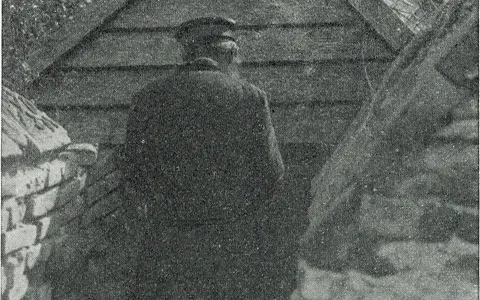
Rabbi Shneur Zalman of Liadi (1745–1812): biography, the Tanya and the founding of Chabad
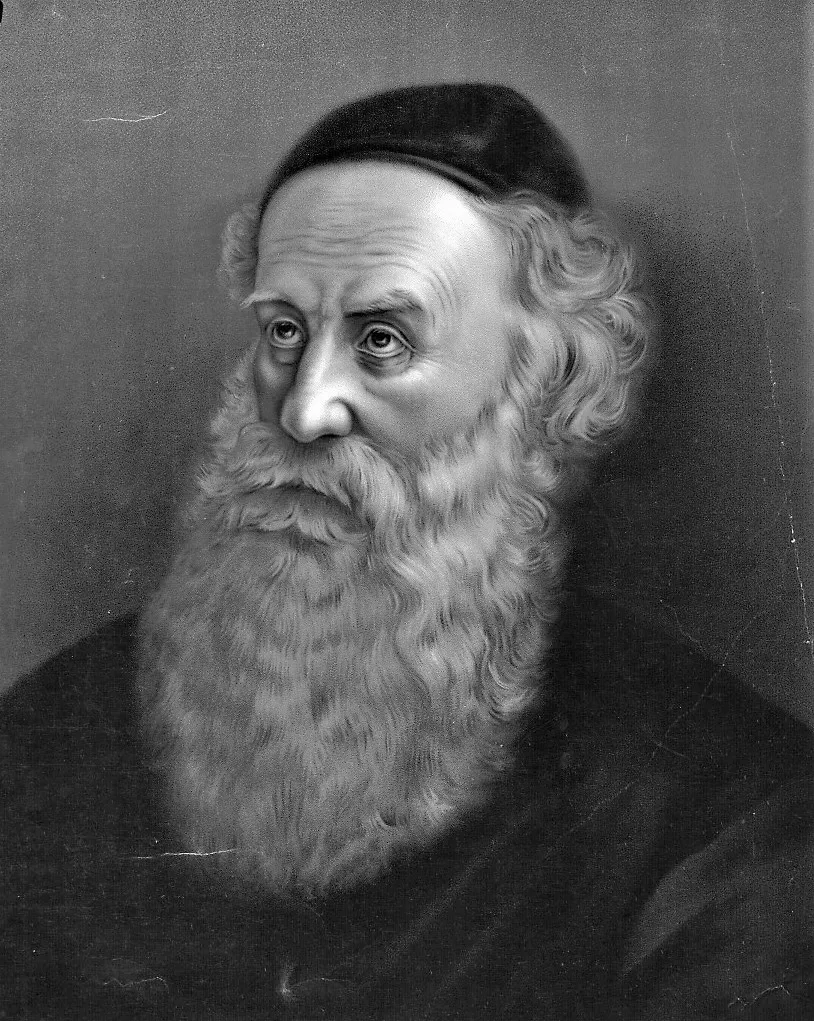
Rabbi Shneur Zalman of Liadi (שניאור זלמן מליאדי) was the founder of the Chabad movement and author of the Tanya. He was born on the 18th of Elul 5505 (around September 1745) in Liozna, in present-day Belarus, and died on the 24th of Tevet 5573 (December 1812) in the village of Peny, fleeing the French invasion. He is buried in Hadiach.
Quick facts
| Name | Rabbi Shneur Zalman, son of Baruch. Of Liadi |
| Born | 1745, in Liozna |
| Died | December 1812, in Peny; buried in Hadiach |
| Teacher | Rabbi Dov Ber, the Maggid of Mezritch |
| Movement | Chabad (Chochmah, Binah, Daat) |
| Works | Tanya (Likutei Amarim), Shulchan Aruch HaRav |
Education
He was born to Baruch, who, it is said, descended from the Maharal of Prague, although some historians question that genealogy. He studied with Rabbi Yissachar Ber in Lubavichi until the age of eleven, and at twelve his neighbors gave him the title of rav. At fifteen he married Sterna Segal. He became an expert in Lurianic Kabbalah.
In 1765 he became a disciple of Rabbi Dov Ber of Mezritch, the Maggid, whose youngest prominent disciple he was. In 1767, at the age of twenty-two, he was maggid of Liozna, a post he held until 1801.
Chabad
He founded and led Chabad, a branch of Hasidism whose name is an acronym of Chochmah, Binah and Daat (wisdom, understanding and knowledge). He sought to give Hasidism an intellectual foundation: the mind must guide the emotions.
After the death of Rabbi Menachem Mendel of Vitebsk, in 1788, he was recognized as the Hasidic leader in Lithuania, and that year he founded Kolel Chabad to support the communities of the Land of Israel. He was succeeded by his son, Rabbi Dovber Schneuri.
The Tanya
His main work, Likutei Amarim (“Collection of Sayings”), known as Tanya, is a systematic guide to Hasidic philosophy for the ordinary person. It deals with the unity of G-d, the tzimtzum, the sefirot, joy and trust (bitachon). It is divided into five parts: Sefer shel Beinonim (“Book of the Intermediates,” the main part, on daily spiritual life and the psychology of the two souls), Shaar HaYichud VeHaEmunah (“Gate of Unity and Faith”), Iggeret HaTeshuvah (“Letter of Repentance”), Iggeret HaKodesh (“Letter of Holiness”) and Kuntres Acharon (“Last Writing”).
The first edition, titled Likutei Amarim, is dated to 1796 according to one source and, according to tradition, to 1797, and was published anonymously. In the second edition, of 1798, the title became Tanya, the word with which the work begins. The fourth and fifth parts were not printed until 1814, after the author’s death.
Shulchan Aruch HaRav
It is a code of law and customs which, according to tradition, was commissioned by the Maggid of Mezritch and which he wrote when very young. It is an authority among Hasidim, and non-Hasidic sources such as the Mishnah Berurah cite it. Rabbi Shlomo Ganzfried used it for his Kitzur Shulchan Aruch.
The opposition
In 1772 (or 1775, according to another source), he and Rabbi Menachem Mendel of Vitebsk tried to meet the Vilna Gaon to discuss Hasidic practices. The Gaon refused to receive them and had issued an excommunication against the Hasidim. In 1797, after the Gaon’s death, leaders of the Vilna community accused the Hasidim of subversion, in part because of the funds sent to the Land of Israel.
Imprisonment in Saint Petersburg
In 1798 he was arrested on suspicion of treason and held for fifty-three days in the Peter and Paul Fortress. A secret commission interrogated him and Paul I ordered his release. The date of his release, the 19th of Kislev 5559, is celebrated by the Hasidim of Chabad as the “New Year of Hasidism.”
In 1800 he was arrested again with his son Moshe, who served as his interpreter; he was released after a few weeks, though forbidden to leave Saint Petersburg. His release followed the accession of Alexander I to the throne.
The Napoleonic wars
He openly supported Tsar Alexander I against Napoleon’s invasion, unlike many Polish Hasidic leaders. Historians disagree about his motivation; some point to his fear that Napoleon would encourage messianic hopes among the Jews.
His last years
He settled in Liadi around 1801, at the invitation of Prince Stanisław Lubomirski, and lived there for some twelve years. He died in 1812, fleeing the advance of the French. His successor moved the movement to Lubavitch, from which it takes its name.
Frequently asked questions
What is the Tanya?
The foundational work of Chabad, a guide to Hasidic philosophy for everyone.
What does Chabad mean?
It is an acronym of Chochmah (wisdom), Binah (understanding) and Daat (knowledge).
Why was he imprisoned?
On a charge of treason, false according to tradition, in 1798.
Who was his teacher?
Rabbi Dov Ber, the Maggid of Mezritch.
Sources
- Shneur Zalman of Liadi, reference article (English Wikipedia) and the sources it cites