The Maggid of Mezritch, Rabbi Dov Ber (c. 1704–1772): biography and teachings
Rabbi Dov Ber of Mezritch (דוב בער ממזריטש), known as the Maggid of Mezritch (“the Preacher”), was the successor of the Baal Shem Tov and the true organizer of Hasidism as a movement. He died on the 19th of Kislev 5533 (December 4, 1772 by the old calendar, December 15 by the present one). Sources do not agree on the year of his birth: 1700, 1704 or 1710.
Quick facts
| Name | Rabbi Dov Ber, the Maggid of Mezritch |
| Born | Around 1704 (other sources give 1700 or 1710), in Lokachi, Volhynia |
| Died | 19 Kislev 5533 (December 1772) |
| Teacher | The Baal Shem Tov |
| Center | Mezhirichi (Mezritch), from where he led the movement |
| Works | Maggid Devarav LeYaakov, Likutim Yekarim, Or Torah |
The early years
Very little is known of his life before he met the Baal Shem Tov, and what is told has a legendary character. The source consulted records that he studied with Rabbi Yaakov Yehoshua Falk and followed Lurianic Kabbalah, though without citing a source. He led an ascetic life, with prolonged fasts, and it is said that he became lame; the source attributes this to poor nutrition.
The meeting with the Baal Shem Tov
He went to the Baal Shem Tov seeking a cure. The best-known account speaks of a test on a passage of the Etz Chaim of Rabbi Chaim Vital: the Baal Shem Tov told him that his explanations were correct but lacked “soul.” It is a legendary story. It is told that, at his side, he gave up strict asceticism and recovered his health, although his left foot remained lame. See the biography of the Baal Shem Tov.
The successor
After the death of the Baal Shem Tov, in 1760, his son Tzvi led the movement briefly and withdrew. Dov Ber and Rabbi Yaakov Yosef of Polonne were the main candidates, and by consensus it was Dov Ber who led it. Some accounts of that succession are legendary. He moved the center of Hasidism from Mezhybozh to Mezhirichi and, because of his state of health, stayed mostly at home. Historians credit him with systematizing the mystical teachings of the Baal Shem Tov and building the movement.
His circle of disciples
The closest group, the Chevraya Kadisha, included, according to the source:
- Rabbi Avraham HaMalach, his son.
- Rabbi Nachum of Chernobyl.
- Rabbi Elimelech of Lizhensk: see his biography.
- Rabbi Zusha of Hanipol.
- Rabbi Levi Yitzchak of Berditchev: see his biography.
- Rabbi Baruch of Mezhybozh, Rabbi Aharon of Karlin, Rabbi Menachem Mendel of Vitebsk and Rabbi Shmelke of Nikolsburg.
- Rabbi Shneur Zalman of Liadi, author of the Tanya: see his biography.
The lists vary slightly between sections of the source.
His teachings
The Maggid left no writings of his own; his disciples gathered his teachings. According to the source, they can be summarized as follows: G-d manifests Himself in creation, which is a form of self-limitation; prayer can lead to ecstatic union with G-d; and the tzaddik is a channel between G-d and creation, and loving him is a path to G-d.
His works
| Work | Edition |
|---|---|
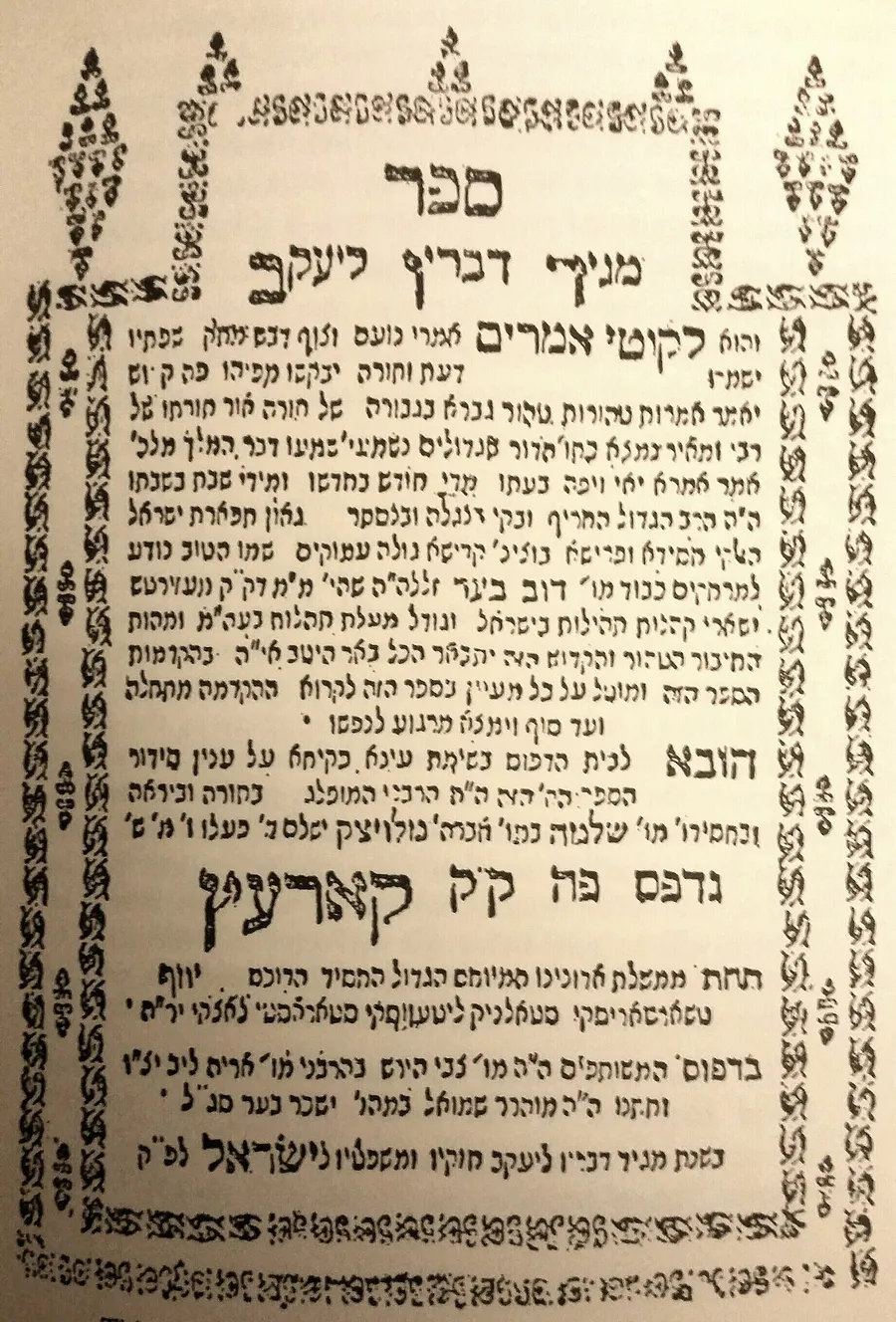
| Maggid Devarav LeYaakov (also Likutei Amarim) | Korets, 1780 according to one source and 1781 according to another; the surviving title page is from 1781. It was edited by his disciple Rabbi Shlomo of Lutsk |
| Likutim Yekarim | Lemberg, 1792 |
| Or Torah | Korets, 1804 |
| Or HaEmet | Husiatyn, 1899 |
| Kitvei Kodesh | Lemberg, 1862 |
| Shemua Tova | Warsaw, 1938 |
The opposition
The Vilna Gaon issued a great excommunication against Hasidism on April 11, 1772. According to the source, the Maggid ignored the opposition, although it is partly blamed for his death. See the biography of the Vilna Gaon.
Burial
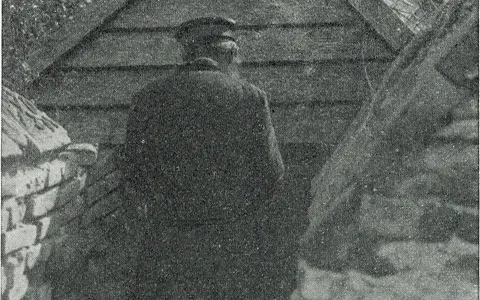
He died in Mezhirichi and the source places his burial in Hannopil, next to Rabbi Zusha, although it also mentions Rivne; the sources do not reconcile this.
Frequently asked questions
What does Maggid mean?
“Preacher” or “one who tells.” It is the title by which he is known.
Did he write books?
No. His teachings were gathered by his disciples in several collections.
What was his relationship with the Baal Shem Tov?
He was his disciple and his successor at the head of the movement.
Sources
- Dov Ber of Mezeritch, reference article (English Wikipedia) and the sources it cites
- Maggid Devarav LeYaakov, entry on Sefaria; edition data cross-checked against catalogs