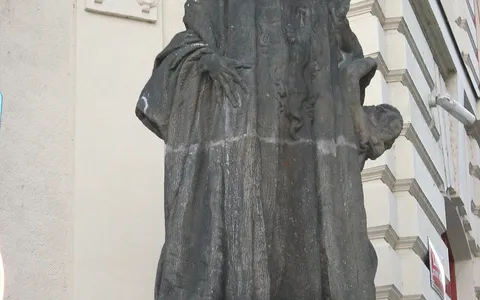
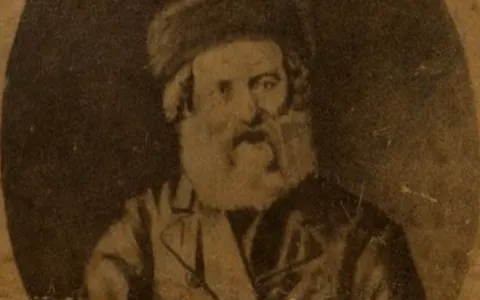
Rashi, Rabbi Shlomo Yitzchaki (1040–1105): biography, commentaries and legacy
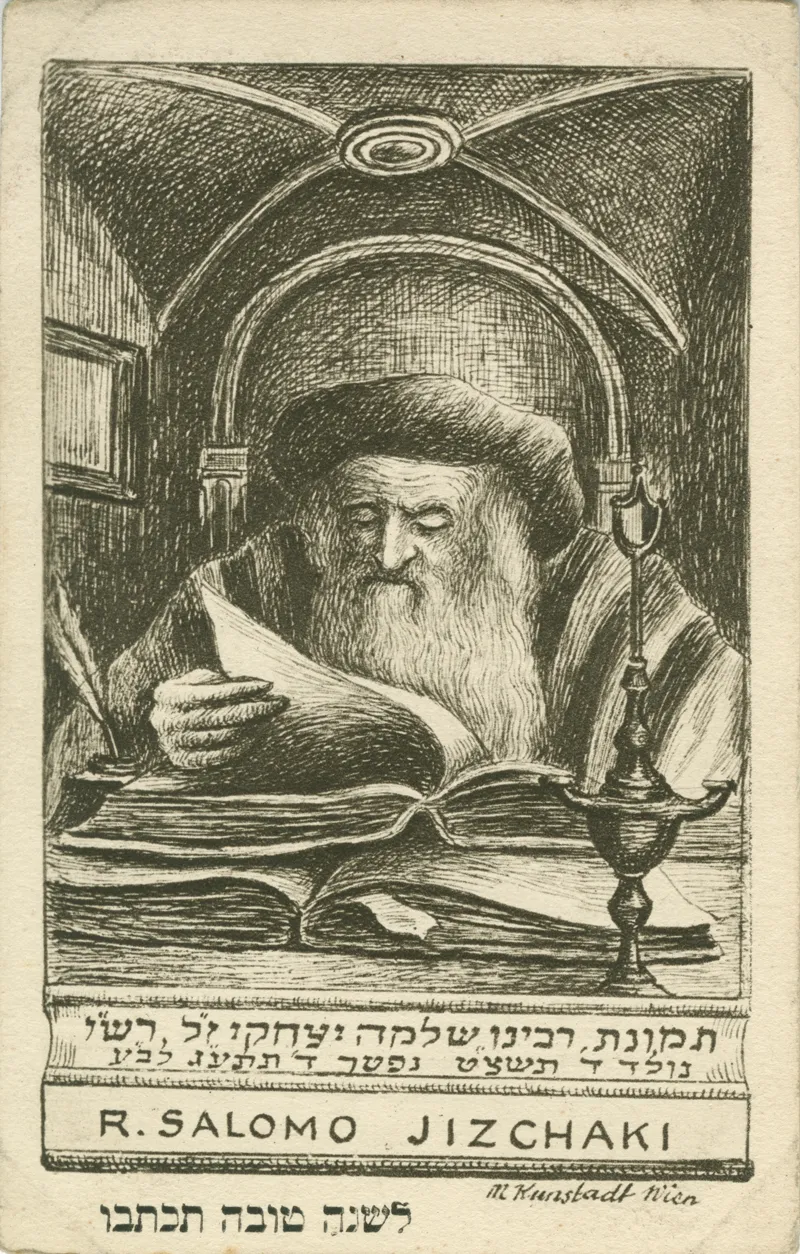
Rabbi Shlomo Yitzchaki (שלמה יצחקי), known by the acronym Rashi (רש״י), is the most influential commentator on the Torah and the Talmud. He was born around 1040 in Troyes, in the Champagne region (northern France), and died there on the 29th of Tammuz 4865 (July 13, 1105). His commentary on the Chumash is the one that accompanies almost all editions of the Torah, and his commentary on the Talmud made possible the study of the Talmud as it is known.
Quick facts
| Name | Rabbi Shlomo, son of Yitzchak (Yitzchaki). Acronym: Rashi |
| Born | Around 1040 (approximate date), in Troyes, Champagne |
| Died | 29 Tammuz 4865 (July 13, 1105), in Troyes |
| Teachers | The schools of Worms and Mainz, disciples of Rabbeinu Gershom |
| Works | Commentary on the Torah and the Tanakh; commentary on the Talmud; responsa; poems |
| Family | No sons; three daughters |
His name
It is an acronym of Rabbi Shlomo Yitzchaki. For a long time he was called “Jarchi” or “Yarchi,” a mistaken reading that Leopold Zunz corrected in 1839.
Family
He was an only child. His maternal uncle, Rabbi Shimon bar Yitzchak, was a rabbi of Mainz and a disciple of Rabbeinu Gershom. He had no sons, but he did have three daughters:
- Yocheved, married to Rabbi Meir ben Shmuel. Their sons were great tosafists: the Rashbam, the Rivam, Rabbeinu Tam and Shlomo the Grammarian.
- Miriam, married to Rabbi Yehuda ben Natan, who completed his commentary on tractate Makkot. Their son Yom Tov headed a yeshiva in Paris.
- Rachel, who married and divorced Rabbi Eliezer ben Shemaya. Little else is known.
Most Ashkenazi rabbinic dynasties trace their ancestry to Miriam or to Yocheved. It has been said that Rashi descended from the sage Yochanan HaSandlar, but he himself does not claim this, so it is an unverified attribution.
Education
Tradition tells that his father taught him Torah from the age of five and that he died while Rashi was still young. At seventeen he married and went to the yeshiva of Rabbi Yaakov ben Yakar, in Worms, from which he returned home three times a year. After the death of Rabbi Yaakov, in 1064, he studied one more year in Worms with Rabbi Yitzchak ben Eliezer HaLevi, and afterward in Mainz with Rabbi Yitzchak ben Yehuda. His teachers were disciples of Rabbeinu Gershom and of Rabbi Eliezer HaGadol.
Troyes
Around the age of twenty-five he returned to Troyes, when his mother died. He joined the rabbinical court and began to answer questions of Halacha. After the death of Rabbi Zerach ben Abraham, he presided over the court and answered hundreds of questions. Around 1070 he founded a yeshiva that attracted numerous disciples.
The legend of the winemaker
Oral tradition describes him as a vintner. There is no direct proof of this, although he shows detailed knowledge of winemaking, and a responsum mentions an imported barrel bearing his seal. It is regarded as an unproven tradition.
The First Crusade
In 1096 the People’s Crusade passed through Lorraine. Among those murdered in Worms were the three sons of his teacher Rabbi Yitzchak ben Eliezer HaLevi. Rashi wrote selichot (penitential poems) that mourn the massacres; seven survive, among them Adonai Elohei HaTzevaot, which is recited on the eve of Rosh Hashanah.
His commentary on the Torah and the Tanakh
Rashi’s commentary on the Chumash is the most influential. It seeks the plain sense (peshat), but draws on the Midrash, the Talmud and the Aggadah. It is concise and clear, attentive to grammar and to the meaning of words, and from time to time it adds glosses in Old French (la’azim). It grew out of the lessons of his yeshiva and he completed it at the end of his life.
He wrote on all the books of the Tanakh, except Chronicles and Ezra–Nehemiah. The commentary on Job was left incomplete, at 40:25. More than three hundred supercommentaries have been written on his Torah commentary.
His commentary on the Talmud
He wrote the first complete commentary on the Babylonian Talmud, covering almost the whole Talmud: some thirty of the thirty-nine tractates, because he died before finishing it. It explains the text phrase by phrase, adds punctuation and translates difficult words into Old French.
Some attributions are disputed: Rabbi Akiva Eger doubted the commentary on Nazir and Rabbi Tzvi Hirsch Chajes doubted that on Taanit. Rabbi Yehuda ben Natan completed Makkot and his grandson the Rashbam finished Bava Batra. It is said that his daughters collaborated on the commentary on Nedarim, but this is a legend.
The “Rashi script”
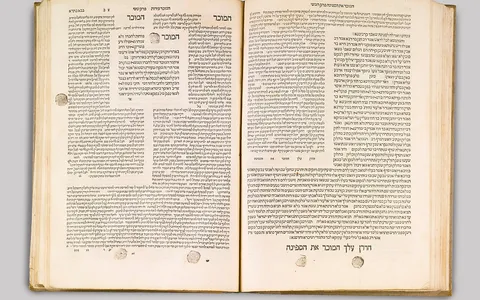
The semi-cursive typeface that bears his name was not used by Rashi. It is based on a 15th-century Sephardic semi-cursive hand, several centuries after his death. The early printers, such as the Soncinos and Daniel Bomberg, used it to distinguish the commentary from the main text in square letters.
The first dated printed Hebrew book
Rashi’s commentary on the Chumash was the first printed Hebrew book of known date: it was printed by Abraham ben Garton in Reggio di Calabria, Italy, on February 18, 1475.
Other works
About three hundred responsa survive, on prayer, food, Shabbat, sales, loans and civil law. Siddur Rashi and Machzor Vitry preserve some of his rulings.
Legacy
His commentary on the Talmud put the study of the Talmud within the reach of many and was the basis for the later Tosafot. It also influenced Christian scholars, such as Nicholas of Lyra.
Timeline
| Date | Event |
|---|---|
| c. 1040 | Born in Troyes |
| c. 1057 | Marries and studies in Worms |
| 1064 | His teacher Yaakov ben Yakar dies; he continues in Worms and Mainz |
| c. 1065 | Returns to Troyes |
| c. 1070 | Founds his yeshiva |
| 1096 | First Crusade: massacres in the Rhineland; he writes selichot |
| 1105 | Dies in Troyes, on 29 Tammuz |
| 1475 | His commentary on the Chumash is printed in Reggio di Calabria |
Frequently asked questions
What does Rashi mean?
It is the acronym of Rabbi Shlomo Yitzchaki (רש״י).
Did he use the “Rashi” script?
No. That typeface is based on a 15th-century hand, long after his time.
How many tractates of the Talmud did he comment on?
About thirty of thirty-nine. He died before finishing, and others completed some tractates.
Was he a winemaker?
It is an oral tradition without direct proof.
Sources
- Rashi, reference article (English Wikipedia) and the sources it cites