
Maimonides’ Guide for the Perplexed: what it is, structure and themes
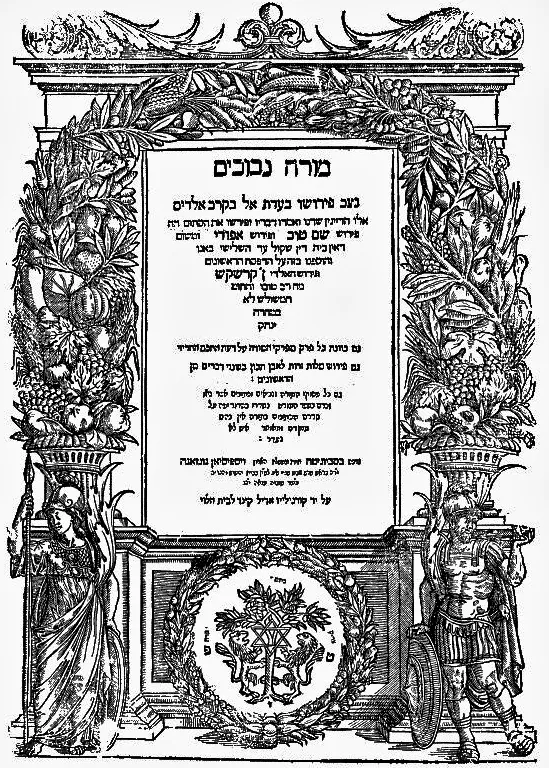
The Guide for the Perplexed (Moreh Nevuchim, מורה נבוכים) is the great philosophical work of Maimonides. He wrote it in Judeo-Arabic, between 1185 and 1190, and addressed it, in parts, to his disciple Rabbi Yosef ben Yehuda of Ceuta.
Quick facts
| Author | Rabbi Moshe ben Maimon (Maimonides) |
| Composed | 1185–1190 (around 1190), in Fustat |
| Original language | Judeo-Arabic |
| Addressee | Rabbi Yosef ben Yehuda of Ceuta |
| Structure | Three parts |
| Standard Hebrew translation | Rabbi Shmuel ibn Tibbon, 1204 |
The three parts
- First part: the incorporeality of G-d and negative attributes, the homonymy of anthropomorphic terms, and the critique of the methods of the kalam.
- Second part: Aristotelian cosmology, with a rejection of the eternity of the universe, and prophecy, which he describes in eleven degrees, with Moshe at the highest.
- Third part: Ezekiel’s vision of the chariot, evil and providence, and the reasons for the 613 commandments.
Translations
Rabbi Shmuel ibn Tibbon translated it into Hebrew in the south of France (1204), with a revision in 1213 and a glossary of technical terms. The translation by Rabbi Yehuda al-Harizi, undated in the sources consulted, is more fluent, although most scholars consider it inferior.
The controversy
Some communities banned the work, and it was burned in Paris in 1233. Critics objected to its positions on angels, prophecy and miracles, and the Raavad objected to incorporeality being treated as dogma. See the biography of Rabbeinu Yonah on his role in that controversy.
Influence
It was used by Thomas Aquinas, Duns Scotus and Meister Eckhart, and spread widely through the Pugio Fidei of Ramón Martí. Scholars still debate whether it should be read with an esoteric meaning (Strauss, Pines, Ravitzky, Fox).
Frequently asked questions
Who is it addressed to?
To his disciple Rabbi Yosef ben Yehuda of Ceuta.
In what language was it written?
In Judeo-Arabic, that is, Arabic written in Hebrew letters.
Why was it controversial?
Because of its positions on the divine attributes, prophecy and miracles.
Sources
- The Guide for the Perplexed, reference article (English Wikipedia) and the sources it cites
- Cross-checking: Sefaria; Stanford Encyclopedia of Philosophy (Samuel ibn Tibbon)