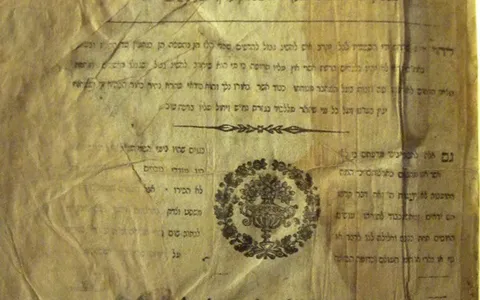
Rabbeinu Yonah of Gerona (c. 1180–1263): biography and Shaarei Teshuvah
Rabbeinu Yonah ben Abraham of Gerona (רבנו יונה גירונדי) was a Catalan rabbi and moralist, cousin of the Ramban, best known for his ethical work Shaarei Teshuvah (“The Gates of Repentance”). He died in Toledo in November 1263; sources give 1263 and, in one, 1264.
Quick facts
| Name | Rabbeinu Yonah ben Abraham Gerondi |
| Born | Around 1180, in Gerona (the exact date is not known) |
| Died | November 1263, in Toledo |
| Teacher | Rabbi Shlomo ben Abraham of Montpellier |
| Disciples | Rabbi Hillel ben Shmuel and Rabbi Shlomo ibn Adret (the Rashba) |
| Works | Shaarei Teshuvah, Sefer HaYirah, Iggeret HaTeshuvah |
The controversy over Maimonides
He was the most prominent disciple of Rabbi Shlomo of Montpellier, one of the main opponents of Maimonides’ philosophy. He signed the ban of 1233 against the Guide for the Perplexed and the Sefer HaMadda. According to Rabbi Hillel ben Shmuel, he instigated the public burning of Maimonides’ writings in Paris, and much of the anger fell on him. Other sources date the ban to 1232 and are more cautious about his role.
The repentance
In 1242, after the burning in Paris of some twenty-four cartloads of copies of the Talmud in the same place, he understood the danger of appealing to Christian authorities in matters of Jewish doctrine. He admitted publicly, in the synagogue of Montpellier, that he had been wrong to attack Maimonides. As penance, he promised to travel to the Land of Israel, prostrate himself before the tomb of Maimonides and ask forgiveness before ten men for seven days.
He set out, but was detained in Barcelona and then in Toledo, where he stayed and became a great teacher of Talmud, who often praised Maimonides in his lessons.
His death
He died suddenly, of a rare illness, in Toledo, in November 1263. Many saw in his sudden death a punishment for not having completed the journey; the source notes that some consider that account a myth of the followers of Maimonides. Much of the biographical data comes from a responsum of Rabbi Shlomo ben Shimon Duran, a descendant of his.
His works
- Shaarei Teshuvah: printed in Fano, in 1505, together with Sefer HaYirah, which had already been printed in 1490.
- Iggeret HaTeshuvah: first printed in Kraków in 1586.
- Talmudic writings: novellae on Bava Batra (Aliyot of Rabbeinu Yonah) and on Sanhedrin, a commentary on Pirkei Avot (published in 1848) and a commentary on Proverbs (Berlin, 1910).
- Issur VeHeter is mistakenly attributed to him.
His influence
His ethical works are classic literature of medieval mussar and remain widely read. They have been translated into Yiddish, Italian and English. A traditional explanation holds that he wrote Shaarei Teshuvah to repair the harm of his attack on Maimonides; the source presents it as a conjecture.
Frequently asked questions
What is Shaarei Teshuvah?
One of the classic works of mussar, on the stages of repentance.
Why did he repent?
Because he understood that it had been a mistake to attack Maimonides’ writings and to turn to the Christian authorities.
Where did he die?
In Toledo, in 1263.
Sources
- Yonah Gerondi, reference article (English Wikipedia) and the sources it cites
- Cross-checking: Chabad.org, Breslev.com and DailyZohar on the controversy and his repentance