Rabbi Chaim Vital (1542–1620): the complete biography of the Arizal’s disciple
Rabbi Chaim Vital (חיים ויטאל) was born in Safed on the 1st of Cheshvan 5303 (autumn 1542) and passed away in Damascus on the 30th of Nisan 5380 (April 1620), at the age of seventy-seven. He was the chief disciple of the Arizal, Rabbi Yitzchak Luria, and the one who put most of his teaching in writing. This is his story: that of a boy who was told of two paths, and of the man who wrote Shaarei Kedusha for those who seek the one he chose.
Quick facts
| Name | Rabbi Chaim Vital, son of Rabbi Yosef Vital. In rabbinic sources, Maharchu (מהרח״ו) |
| Born | 1 Cheshvan 5303 (autumn 1542), in Safed |
| Died | 30 Nisan 5380 (April 1620), in Damascus, aged 77 |
| Teachers | Rabbi Moshe Alshich (Talmud), Rabbi Moshe Cordovero, the Ramak (Kabbalah) and the Arizal (from 1570) |
| Main works | Etz Chaim, Shaarei Kedusha, Sefer HaChezyonot |
His name
In rabbinic works he is known by the acronym Maharchu, from Morenu HaRav Chaim Vital, “our teacher, Rabbi Chaim Vital” (מהרח״ו). He also appears with the nickname Calabrese, because his father’s family came from Calabria, in southern Italy. His name is transcribed in many ways (Jaim, Haim, Chaim, Hayyim Vital); all designate the same person.
A promise before his birth
The story of Rabbi Chaim Vital begins two years before his birth, in a Jewish home in the diaspora. His father, Rabbi Yosef Vital, was a scribe of tefillin. In the year 5301 (1540/41) a sage named Rabbi Chaim Ashkenazi stayed at his house, and before taking his leave he made him an announcement: he would go up to the Land of Israel and settle there; there a son would be born to him, he would call him Chaim, like his guest, and that son would be a sage without equal in his generation.
Rabbi Yosef did go up to the Land of Israel. Two years after his arrival the child of the promise was born in Safed. This account appears in Vital’s own diary, which says that he was born “in the year 303” (5303).
Growing up in Safed
Few cities in Jewish history have gathered so many sages in so few years as the Safed of the 16th century. There Rabbi Yosef Karo wrote the Shulchan Aruch; there Rabbi Moshe Alshich preached his commentaries on the Torah; there Rabbi Moshe Cordovero, the Ramak, ordered the whole edifice of Kabbalah. In that small city of Galilee the scribe’s son grew up.
His teacher in Talmud and in the non-esoteric disciplines was Rabbi Moshe Alshich. Soon the boy attracted the attention of the great. In 5317 (1557), when he was about fourteen, Rabbi Yosef Karo passed on to Alshich an order that he said he had received from his maggid, the heavenly voice that spoke to him: he was to put all his effort into teaching Chaim, because he was destined to take his place in the next generation.
The same message reached the young man, together with a sentence that he noted down forever: half the world was sustained by the merit of his father, for the kosher tefillin he wrote, and the other half, by him.
In the tradition of Safed a maggid (“one who speaks”) is a heavenly voice that speaks through the mouth of a sage and transmits teachings to him. Rabbi Yosef Karo recorded the words of his maggid in the work Maggid Meisharim.
The crossroads
There was another prediction in his youth, a less luminous one. In 5314 (1553/54), at thirteen, a sage versed in the reading of the lines of the hand examined his palms and spoke to him frankly. At twenty-four, he told him, thoughts would come to him that would draw him away from the study of the Torah for two and a half years. Afterward two paths would open before him, one toward Gan Eden and the other toward Gehinnom. If he chose the bad one, there would be no greater wicked person in his generation than he; if he chose the good one, he would surpass all his contemporaries in wisdom and in fear of sin.
The lost time
Vital himself kept the account because, looking back, he recognized himself in it. In his youth he was drawn to the occult sciences of his time and devoted nearly two years to alchemy, the art of transforming metals. Afterward he repented of that lost time.
Whoever reads the introduction to Shaarei Kedusha will notice it: when the author laments those who seek the secret of alchemy instead of true wisdom, he is not speaking from outside. He speaks of a path that he himself walked and knew how to abandon.
The return to Kabbalah
Around 1564 he turned back to Kabbalah, studying it at first according to Cordovero’s system. In those years he married his first wife, Jana. Soon after the wedding he had a dream that he never forgot: Eliyahu the prophet took him by the hand and led him to a garden where the righteous of all generations were seated.
The Arizal’s disciple
In early 1570 there arrived in Safed, from Egypt, a man of thirty-six who spoke little of himself: Rabbi Yitzchak Luria, whom posterity would call the Ari (his name is abbreviated with an acronym that coincides with the word “lion”). A few months later, on the 23rd of Tammuz 5330, Cordovero died, and around the newcomer a circle of disciples began to form. Vital, who was then about twenty-seven, became the foremost of them.
The relationship lasted less than two years, but it marked the rest of his life. According to the Sefer HaChezyonot, the Ari told him that he had come into the world only to teach him, and that through him correction would come to the others.
Devotion and verification
Vital, for his part, was not a credulous disciple. When his master asked why he had not practiced the meditations he had taught him for meeting the souls of the righteous, he answered simply that first he wanted to verify that all of it was true. That mixture of total devotion and demand for verification accompanied him always.
The master’s death
On the 5th of Av 5332 (summer 1572), the Ari died in an epidemic, at barely thirty-eight. He had written almost nothing. All his teaching was in the memory and in the notebooks of his disciples, and above all in those of Rabbi Chaim Vital.
The guardian of the teaching
From that moment, Vital gave himself to a task that would occupy him for more than twenty years: putting in writing, ordering and explaining what he had heard from his master. He considered himself his authorized interpreter, and in 1575 twelve companions of the circle signed a commitment to study the Ari’s doctrine only with him, not to press him to reveal more than he thought fit and to keep what they learned secret.
Not everyone accepted that primacy, and tensions with other disciples and other sages accompanied him all his life.
Jerusalem and the return to Safed
At the end of 1577 he moved to Jerusalem, where he served as a rabbi and headed a yeshiva until 1585. There he wrote the definitive version of his exposition of the Lurianic system. In 1586 he returned to Safed, and on the 20th of Elul 5350 (1590) he received rabbinic ordination from his old teacher, Rabbi Moshe Alshich.
The episode of the notebooks
From those years comes the most famous episode about his writings. According to tradition, while a long illness kept him bedridden, one of his followers managed, in exchange for money, to have Moshe, Rabbi Chaim’s younger brother, hand over for a few days the notebooks that Chaim kept under lock. Many copyists worked at once and, in very little time, hundreds of pages left the chest and began to circulate.
The versions of the episode do not agree on the date or on the sum paid, and historians debate when it happened.
Damascus
In the last years of the 16th century he settled in Damascus, where he would spend the rest of his life, apart from some stays in the Land of Israel. For a time he was rabbi of the Sicilian community of the city.
They were not quiet years. He clashed with other rabbis, among them Rabbi Yaakov Abulafia, who doubted that he was the only faithful depositary of the Ari’s Kabbalah. In 1604 he suffered a serious illness that damaged his eyesight, and in some periods he became almost blind. He married more than once, and his son Shmuel would be the heir of his manuscripts.
The “Book of Visions”
In Damascus, above all between 1609 and 1612, he gathered the personal notes that he called Sefer HaChezyonot (ספר החזיונות), the “Book of Visions.” There he noted dreams of his own and of others, prophecies that concerned him and memories of his life.
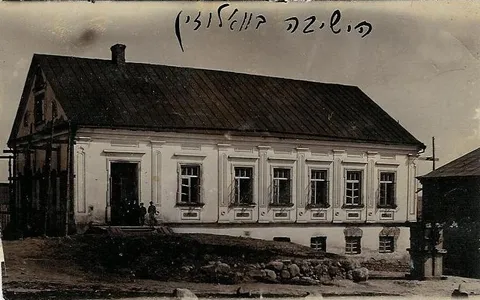
It is a rare document in rabbinic literature: the spiritual diary of a great sage, written with the awareness of a mission and also with its doubts. Much of what we know of his life comes from those pages. The diary circulated in the early editions under the title Shivchei Rabbi Chaim Vital, and was printed in Ostrog in 1826.
Death and burial
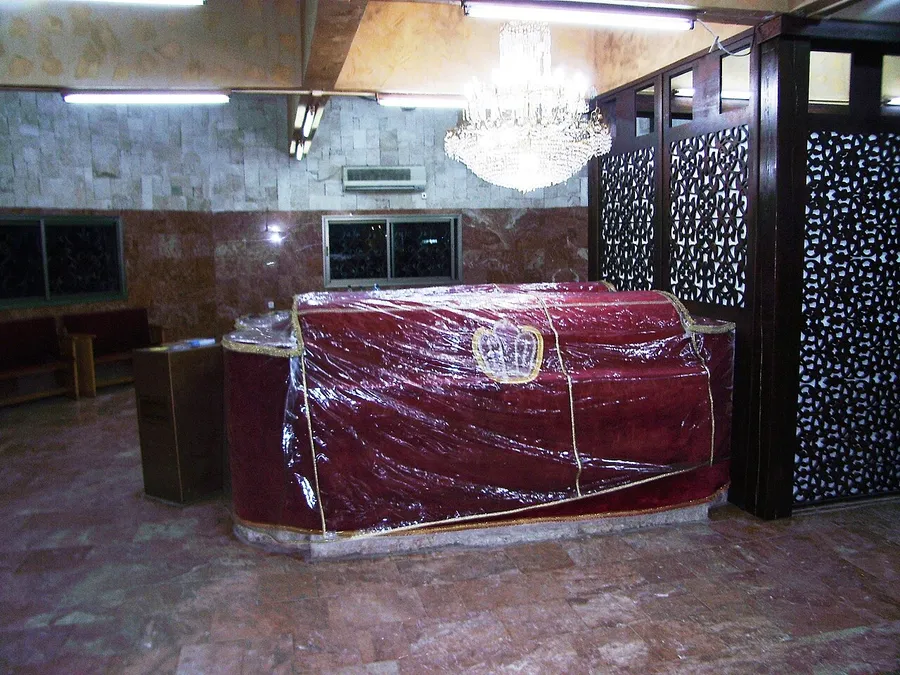
Rabbi Chaim Vital died in Damascus on the 30th of Nisan 5380 (April 1620), as he was preparing to return to Safed. He was seventy-seven years old. He was buried in the Jewish cemetery of the city, and for centuries his grave was a place of visits and prayer.
In April 2025 the grave was desecrated, and the event shook Jewish communities around the world. A tradition maintained by Rabbi Chaim Pinto holds that his remains were moved and rest in Kiryat Malachi, in Israel. Others deny this and affirm that the grave in Damascus was never opened.
The work and the legacy
Etz Chaim, the “Tree of Life”
Vital’s major work is the great corpus in which he set out the Kabbalah of the Ari, known as Etz Chaim (עץ חיים). Its history is almost as eventful as its author’s.
A first version remained in Damascus in the hands of his son Shmuel, who for many years did not allow it to be copied. The fragments of the version that he arranged in Jerusalem appeared, apparently soon after his death, in a genizah in the city, and were recovered by Rabbi Abraham Azulai and his companions. From those materials, Rabbi Meir Poppers prepared the edition that he finished in 1653 and that is the basis of later editions.
A scrupulous writer
As a writer, Vital was scrupulous. He indicated when he did not remember something exactly, when he had heard a teaching in two different ways or when a part had slipped his mind. He preferred to record a gap rather than fill it with something invented.
Shaarei Kedusha
Alongside his kabbalistic works he wrote treatises on ethics and the service of G-d. The most widely circulated is Shaarei Kedusha (שערי קדושה), “The Gates of Holiness,” first printed in Constantinople in 1734 and reissued many times since.
In it, the closest disciple of the Ari, the boy to whom one day two paths were announced, describes the path he chose: how to purify character traits, fulfill the commandments and draw near, step by step, to holiness. He does so for those who seek it sincerely, without promising shortcuts. For a guide to its structure, see What is Shaarei Kedusha: a guide to the gates, and for the bilingual edition, the book page.
Timeline
| Date | Event |
|---|---|
| 1540/41 (5301) | Rabbi Chaim Ashkenazi announces to Rabbi Yosef Vital that he will have a son in the Land of Israel |
| 1542 (5303) | Rabbi Chaim Vital is born in Safed, on 1 Cheshvan |
| 1553/54 (5314) | At thirteen, the prediction of the two paths |
| 1557 (5317) | Rabbi Yosef Karo passes on to Alshich the charge to teach him |
| c. 1564 | Turns to Kabbalah and studies with Cordovero; marries Jana |
| 1570 | The Ari arrives in Safed; Cordovero dies on 23 Tammuz; Vital joins the Ari’s circle |
| 1572 (5332) | The Ari dies, on 5 Av |
| 1575 | Twelve companions commit to studying the Ari’s doctrine with Vital |
| 1577–1585 | Lives in Jerusalem; serves as rabbi and heads a yeshiva |
| 1586 | Returns to Safed |
| 1590 (5350) | Receives rabbinic ordination from Rabbi Moshe Alshich, on 20 Elul |
| 1604 | Serious illness that damages his eyesight |
| 1609–1612 | Gathers the Sefer HaChezyonot in Damascus |
| 1620 (5380) | Dies in Damascus, on 30 Nisan |
| 1653 | Rabbi Meir Poppers finishes the edition of the Etz Chaim |
| 1734 | First printing of Shaarei Kedusha, in Constantinople |
| 1826 | The diary Shivchei Rabbi Chaim Vital is printed in Ostrog |
| 2025 | Desecration of his grave in Damascus, in April |
People who appear in his life
- Rabbi Yosef Vital: his father, a scribe of tefillin, from a family originally from Calabria.
- Rabbi Moshe Alshich: his teacher of Talmud and the one who gave him rabbinic ordination.
- Rabbi Yosef Karo: author of the Shulchan Aruch, who passed on the charge to teach him.
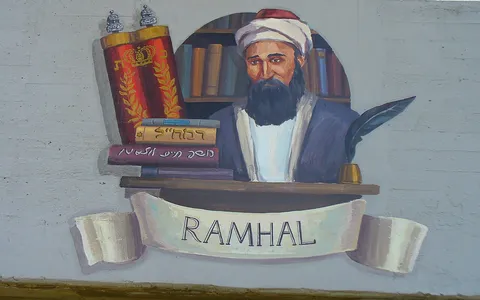
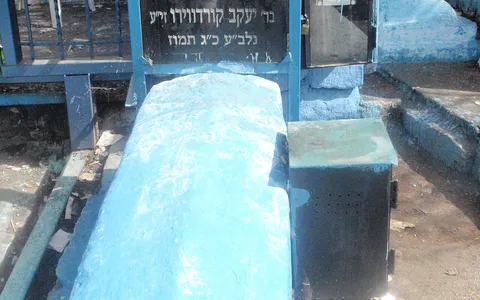
- Rabbi Moshe Cordovero (the Ramak): his first teacher of Kabbalah; he died in 1570. See his biography.
- The Ari (Rabbi Yitzchak Luria): his great teacher; he died in 1572. See his biography.
- Rabbi Yaakov Abulafia: a rabbi of Damascus who disputed his authority over the Ari’s Kabbalah.
- Shmuel Vital: his son, heir of his manuscripts.
- Rabbi Abraham Azulai and Rabbi Meir Poppers: those who recovered and edited the Etz Chaim.
Frequently asked questions
Who was Rabbi Chaim Vital?
He was the chief disciple of the Arizal and the man who put his master’s Kabbalah in writing in the Etz Chaim. He was born in Safed in 1542 and died in Damascus in 1620.
Why is he called Maharchu?
It is an acronym of Morenu HaRav Chaim Vital, “our teacher, Rabbi Chaim Vital.”
How long did he study with the Arizal?
Less than two years: from 1570 until the Ari’s death in 1572. It marked the rest of his life.
What is the Sefer HaChezyonot?
It is his spiritual diary, written mainly between 1609 and 1612 in Damascus: dreams, prophecies and memories of his life. Much of what we know of his biography comes from it.
Where is he buried?
In the Jewish cemetery of Damascus, where his grave was for centuries a place of prayer. A tradition holds that his remains rest in Kiryat Malachi, in Israel.
What is his best-known book?
His major work is the Etz Chaim, which sets out the Kabbalah of the Ari. The most widely circulated among readers is Shaarei Kedusha, his work of ethics and spiritual conduct.
Sources
- Rabbi Chaim Vital, Sefer HaChezyonot (Shivchei Rabbi Chaim Vital), Ostrog, 1826
- Biography “Rabbi Chaim Vital (1542–1620)” included in The Gates of Holiness, Ancient Gate Press, 2026