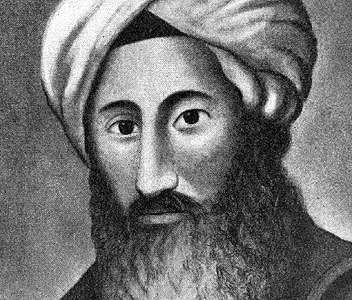
Rabbi Akiva (c. 50–135): biography, teachings and martyrdom

Rabbi Akiva ben Yosef (רבי עקיבא) was one of the greatest sages of the Tannaitic period. He was born around the year 50 in Lod and died in Caesarea around 135. He is regarded as the systematizer of the Mishnah and of halachic Midrash. The great masters of the next generation came from him.
Quick facts
| Name | Rabbi Akiva ben Yosef |
| Born | Around the year 50, in Lod |
| Died | Around 135 (some scholars propose around 132), in Caesarea |
| Teachers | Rabbi Eliezer ben Hyrcanus, Rabbi Yehoshua ben Chananiah, Nachum Ish Gamzu |
| Disciples | Rabbi Meir, Rabbi Yehuda bar Ilai, Rabbi Shimon bar Yochai, Rabbi Yose ben Chalafta |
What is known
He was of humble origin, and some sources say his ancestors were converts. He studied with Rabbi Eliezer ben Hyrcanus, Rabbi Yehoshua ben Chananiah and Nachum Ish Gamzu, and was close to Rabban Gamliel II. He served as a supervisor of the poor. The source places him in Rome in 95–96 and in Nehardea before 110.
His work
Tradition credits him with the systematization of the Mishnah, of halachic Midrash and of the halachot, and scholars acknowledge that the Mishnah of Rabbi Yehuda HaNasi and most of the halachic midrashim come from his school. He held that every word, particle and letter of the Torah contains a meaning, and he developed exegetical methods that are fundamental to talmudic study. He is considered decisive in the fixing of the canon of the Tanakh.
From shepherd to master (tradition)
The Talmud (Nedarim 50a) tells that he was an illiterate shepherd who married the daughter of Kalba Savua. Her name, Rachel, appears only in a later version. He began to study around the age of forty, and his wife encouraged him with the words “go and become a sage.” He spent twelve years studying and returned with twelve thousand disciples; he left for another twelve and returned with twenty-four thousand. These are legendary accounts, and the numbers of disciples vary among the sources.
The Bar Kokhba revolt
His only established link with the revolt (132–136) is that he considered Bar Kokhba the promised Messiah. The source warns that the idea that his disciples died fighting comes from Nachman Krochmal, some two hundred years ago, with no earlier source.
His death
A baraita says that he was sentenced to death in Caesarea by Tineius Rufus for defying Hadrian’s decrees on Jewish practice and teaching. According to Jewish sources, he was flayed with iron combs. The three versions of the account agree that he died reciting the Shema. In the Babylonian Talmud he prolongs the word Echad (“One”) until he expires, and a heavenly voice praises him.
The burial
The tomb recognized today is in Tiberias and is a place of pilgrimage on Lag BaOmer. A legend says that Eliyahu and Yehoshua took his body at night and hid it in a cave near Caesarea; the source does not confirm which is the exact account.
Teachings
- The Pardes: according to tradition, four men entered the Pardes (the mystical garden) and only Rabbi Akiva came out in peace (Chagigah 14b).
- Free will: “Everything is foreseen, but freedom is given” (Pirkei Avot 3:18).
- Love of one’s fellow: he called “you shall love your neighbor as yourself” a great principle of the Torah.
- Mercy and justice: he taught that G-d combines mercy with strict justice.
Frequently asked questions
Who was Rabbi Shimon bar Yochai’s teacher?
Rabbi Akiva: see the biography of the Rashbi.
At what age did he begin to study?
According to tradition, around forty, although some legendary versions give much higher ages.
How did he die?
Tortured by the Romans in Caesarea, reciting the Shema.
Sources
- Akiva ben Joseph, reference article (English Wikipedia) and the sources it cites
- Babylonian Talmud: Nedarim 50a; Berachot 61b; Chagigah 14b; Menachot 29b