Rabbi Shimon bar Yochai, the Rashbi: biography, the cave and the Zohar tradition
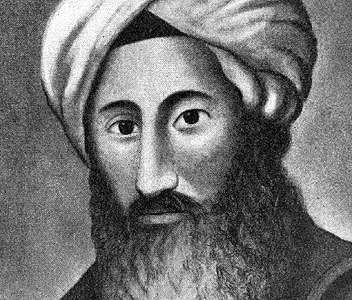
Rabbi Shimon bar Yochai (שמעון בר יוחאי), known by the acronym Rashbi, was one of the great sages of the Tannaitic period, in the 2nd century. He was a disciple of Rabbi Akiva and, according to kabbalistic tradition, the author of the Zohar. His figure brings together three levels that are worth distinguishing: what the talmudic sources say, what popular tradition tells and what academic research holds.
Quick facts
| Name | Rabbi Shimon, son of Yochai. Acronym: Rashbi (רשב״י) |
| Period | Tannaim, 2nd century. Modern sources give about 90–160 without firm documentation |
| Place | Galilee, Land of Israel |
| Teacher | Rabbi Akiva |
| Burial | Traditionally in Meron, next to his son Eleazar |
| Attribution | The Zohar, according to kabbalistic tradition |
Disciple of Rabbi Akiva
He studied with Rabbi Akiva for thirteen years, in Bnei Brak, according to tradition. The Jerusalem Talmud tells that Rabbi Akiva ordained only Rabbi Meir and Rabbi Shimon. Another source (Berachot 28a) also places him in Yavne, but Zacharias Frankel rejected that account for chronological reasons. Among the halachic traditions, the Sifre (on Numbers and Deuteronomy) and the Mechilta of Rabbi Shimon (on Exodus) are attributed to him, although modern research tends to regard them as later compilations.
His method
He sought the underlying reason for the commandments, and on occasion for this reason modified how a law is applied. He often disagreed with Rabbi Akiva and often agreed with Rabbi Meir or Rabbi Yose ben Chalafta.
Sayings attributed to him
- He valued the study of Torah above other obligations.
- He taught that repentance can transform even a great wicked person.
- He condemned public humiliation and arrogance.
The cave (talmudic tradition)
The Talmud (Shabbat 33b) tells that, under Roman rule, Rabbi Shimon was denounced for criticizing the government and sentenced to death. He hid with his son, Rabbi Elazar, first in the study hall and then in a cave, where a miracle caused a carob tree and a spring to appear. They spent twelve years there, studying buried in the sand up to their necks, until Eliyahu announced at the entrance that the emperor had died and his decree was annulled.
On leaving and seeing some men plowing and sowing, their gaze burned whatever they looked at, and a heavenly voice asked whether they had come out to destroy the world and sent them back to the cave; they stayed twelve months more, until another heavenly voice ordered them to come out. It is a legendary narrative. Other accounts in the Talmud, such as the purification of Tiberias, are associated with the same tradition. Scholars treat the talmudic material as a mixture of historical data and legend, and the chronology is not firmly established.
The grave and Lag BaOmer
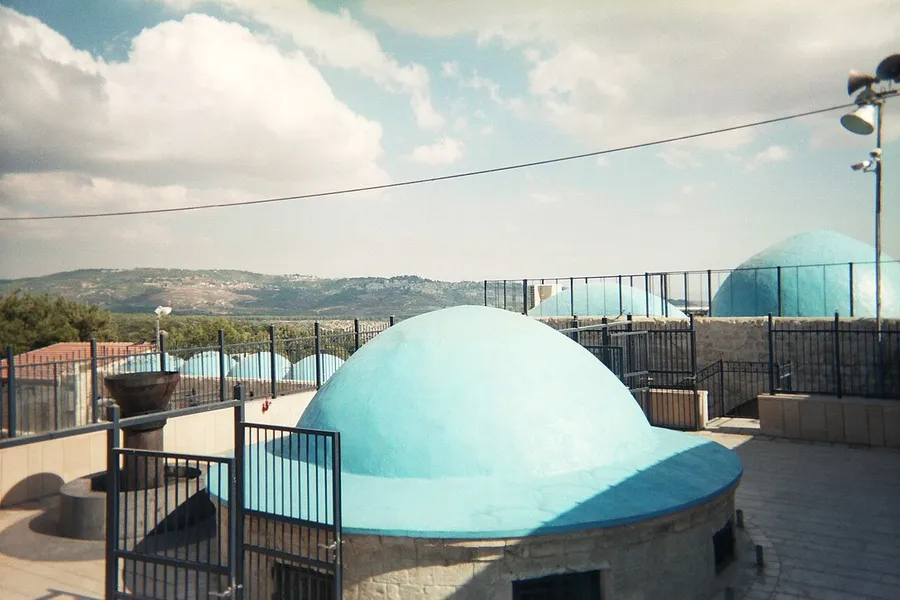
Tradition places his grave in Meron, in the same tomb as his son Eleazar, although this identification is a later tradition. Many celebrate his passing on the 33rd of the Omer (Lag BaOmer) with bonfires, feasts and the first haircut (upsherin) of three-year-old boys. That date is linked to a passage attributed to Rabbi Chaim Vital and, according to some, to a printing error. It is an ancient custom without documentation from his time.
The Rashbi and the Zohar
Kabbalistic tradition attributes the Zohar to Rabbi Shimon and his circle. Academic research, since Gershom Scholem, attributes it to Rabbi Moshe de León (c. 1240–1305), who would have written it around 1280–1286. This attribution is the most widespread among researchers, although it has not been accepted without criticism, and some propose several authors or a small ancient core. Different religious authorities have taken opposite positions on its antiquity. See the guide to the Zohar.
What is history and what is tradition
| Level | What is known |
|---|---|
| Talmud and rabbinic literature | He was a disciple of Rabbi Akiva and a major figure of his generation |
| Legend | The cave (twelve years and twelve months more) and the associated miracles |
| Later tradition | Meron and Lag BaOmer |
| Kabbalistic attribution | The Zohar, rejected by modern research |
Frequently asked questions
What does Rashbi mean?
It is the acronym of Rabbi Shimon bar Yochai (רשב״י).
Did he write the Zohar?
Kabbalistic tradition says so. Academic research attributes it to Moshe de León, in the 13th century.
Why is Lag BaOmer celebrated?
Because of the tradition that associates it with his passing, and with the day of his hilula (the “day of his joy”).
Where is his grave?
Traditionally in Meron, in Upper Galilee.
Sources
- Shimon bar Yochai, reference article (English Wikipedia) and the sources it cites
- Zohar, reference article (English Wikipedia)
- Babylonian Talmud, Shabbat 33b (the story of the cave)