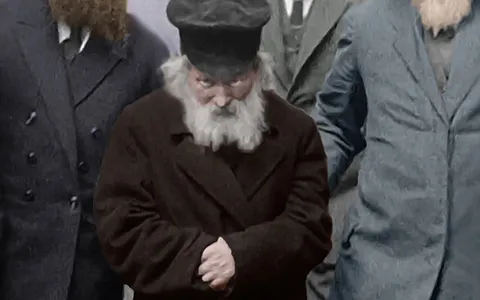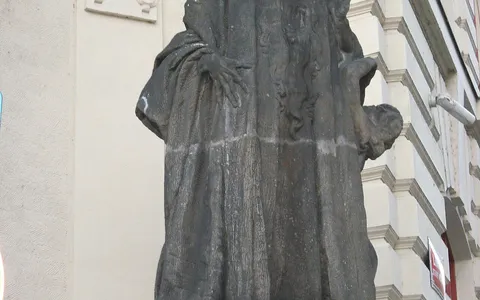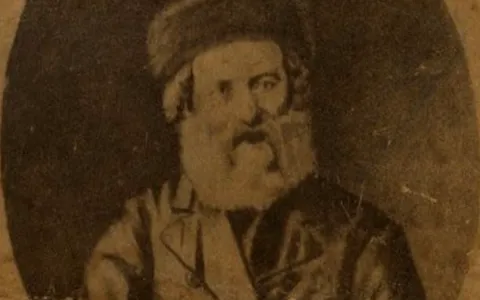

Rabbi Moshe Isserles, the Rema (1530–1572): biography, the Mappah and legacy
Read aloud with your device’s voice.
Rabbi Moshe ben Israel Isserles (משה איסרלש), known by his acronym, the Rema (רמ״א), was the great authority on Halacha of 16th-century Ashkenazi Judaism. He lived and died in Kraków. His glosses on the Shulchan Aruch, the Mappah (“the tablecloth”), laid the customs of the Jews of Poland and central Europe over the “set table” of Rabbi Yosef Karo, and with them the code was accepted by Ashkenazim too. The Encyclopaedia Judaica records that his contemporaries called him “the Maimonides of Polish Jewry.”
Quick facts
| Name | Rabbi Moshe ben Israel Isserles; the surname comes from “Isserl,” his father’s nickname. Acronym: Rema |
| Born | In Kraków. February 22, 1530 (25 Adar I 5290) according to Wikipedia; other sources give 1520 or around 1525 (see “Disputed dates”) |
| Died | 18 Iyar 5332 (Lag BaOmer), in Kraków, in May 1572 |
| Father and mother | Israel ben Yosef (Isserl) and Malka |
| Teacher | Rabbi Shalom Shachna, in Lublin |
| Positions | Founded and funded a yeshiva in Kraków; member of the rabbinic court from 1550; dayan in 1553; took part in the Council of the Four Lands |
| Main works | Mappah, Darkhei Moshe, Torat HaChatat, Torat HaOlah, Mechir Yayin, responsa |
Family
His father, Israel ben Yosef, called Isserl, was a talmudist and a man of means who probably headed the community; the English Wikipedia article on the synagogue says that this banker settled in Kraków in 1519. His mother was named Malka. Wikipedia makes him a grandson of Rabbi Yechiel Luria, the first rabbi of Brisk; the Encyclopaedia Judaica calls him a great-grandson, so that kinship is not entirely certain. Rabbi Solomon Luria, the Maharshal, was a relative and fellow student.
He had three brothers (Isaac, Eliezer and Yosef) and a sister, Miriam Bella, who married Pinchas Horowitz. His first wife died young, at about twenty; the Encyclopaedia Judaica gives 1552. Current scholarship doubts that she was the daughter of Rabbi Shalom Shachna, as tradition held. He then married the sister of Rabbi Yosef ben Mordechai Gershon HaKohen. His son, Rabbi Yehuda Leib, and two daughters continued the family: one of them, Dresel, married Simcha Bunim Meisels. A great-granddaughter of his married Rabbi Shabbetai ben Meir HaKohen.
Education
He studied at home with his father and with an uncle, Rabbi Moshe Heigerlich, and then in Lublin with Rabbi Shalom Shachna, whose yeshiva he attended until 1549. Among his fellow students were Rabbi Solomon Luria and Rabbi Chaim ben Bezalel, the older brother of the Maharal of Prague. Shachna, like Rabbi Yaakov Pollak, was opposed to writing codes and kept no copy even of his own responsa; that distrust of “closed and sealed” rulings appears in the Rema’s own Torat HaChatat.
His career in Kraków
He returned to Kraków around 1549 or 1550 and founded a large yeshiva. Being wealthy, he supported his students out of his own pocket. By 1550 he was listed on the city’s rabbinic court, and in 1553 he was appointed dayan. My Jewish Learning, following Menachem Elon, says that at twenty he was rabbi of Kraków and held the post for some twenty-two years; the sources describe his office in different ways, but agree that he was the city’s authority until his death. He opposed pilpul and preferred the plain interpretation of the Talmud.
Among those who studied with him were David Gans, Mordechai ben Abraham Jaffe, Abraham HaLevi Horowitz (father of Rabbi Isaiah Horowitz), Joshua Falk, Menachem David of Tiktin and Zvi Hirsch Elzisher, according to the Encyclopaedia Judaica.
Many rabbis consulted him. Rabbi Meir Katzenellenbogen asked for his opinion in the Bragadin-Giustiniani dispute, one of the earliest lawsuits over the rights to a book, and he corresponded with Rabbi Yosef Karo, with Rabbi Solomon Luria and with his teacher’s son, Rabbi Israel Shachna.
His works
Darkhei Moshe
His first major legal work is a commentary on the Tur and, afterward, on Karo’s Beit Yosef. Sefaria dates it between 1545 and 1565. When Isserles learned that the Beit Yosef had already accomplished a similar purpose, he shortened his manuscript and kept only what complemented it. The abridged version is printed alongside the Tur; the full version usually appears separately, at the back of many editions. It was first printed long after his death: the Encyclopaedia Judaica mentions Sulzbach, 1692, for Yoreh De’ah, and Fürth, 1760, for Orach Chayim.
Torat HaChatat
A guide to the laws of issur v’heter, mainly dietary laws, printed in Kraków in 1569. Rabbi Yom Tov Lipmann Heller criticized it in his Torat HaAsham, and Rabbi Joseph Saul Nathanson defended it in his Torat Moshe.
The Mappah
The work for which he is best known. The Rema drew his own rulings out of Darkhei Moshe and presented them briefly and categorically, without citing sources, imitating the style of the Shulchan Aruch. He did this even though in Torat HaChatat he had criticized that kind of code. He added rulings from Germany and France taken from the Or Zarua, the Mordechai, the Rosh, the Semag, the Semak and the Haggahot Maimuniyot, incorporated Ashkenazi customs, corrected passages that copyists or printers had altered, and pointed out inconsistencies in Karo’s text.
According to Menachem Elon’s analysis, he did not want Karo’s code to be accepted without discussion: he wanted the student to keep the various opinions at hand so as to apply the principle that “the halacha follows the later authorities” together with local custom. He gave two reasons for continuing: that Karo had omitted many opinions, especially Ashkenazi ones, and that he had followed the majority of Alfasi, Maimonides and the Rosh instead of deciding according to later authorities.
The date of printing varies by source. The Encyclopaedia Judaica places it in the Kraków edition of 1569–1571; Wikipedia notes that from 1574 or 1578 most editions include it. Since then the Shulchan Aruch and the Mappah have been printed and studied together: see the guide to the Shulchan Aruch.
Torat HaOlah and Mechir Yayin
Torat HaOlah (“The Law of the Burnt Offering”) was written between 1560 and 1570 and printed in Prague in 1570. It deals with the deeper meaning of the Temple and its sacrifices and uses the occasion to set out principles of faith, with ideas from philosophy, physics, astronomy and Kabbalah. According to Sefaria’s entry it has an author’s introduction, an index, three parts, a kabbalistic commentary on Baruch She’amar and concluding poems. The Encyclopaedia Judaica describes it as a philosophical presentation of Judaism that tries to ground it in Kabbalah.
Mechir Yayin (“The Price of Wine”) is an allegorical commentary on the Book of Esther, printed in Cremona in 1559. Sefaria’s entry tells that he wrote it in his youth, one Purim, in difficult circumstances: he was fleeing an epidemic and had taken refuge in Szydłów, and he gave it to his family (according to the Hebrew version, to his father) in place of mishloach manot.
Responsa and other works
- Responsa: the Kraków edition of 1640 gathers 132 responsa written between 1550 and 1571, 91 of them by Isserles. They are mostly practical questions of daily life.
- Glosses on Rabbi Jacob Weil’s She’itah u-Vedikah (Kraków, 1557), on Bava Metzia and Niddah, and on the Mordechai.
- Yad Ramah: notes on the Rosh and on Issur v’Heter (Lemberg, 1866).
- Karnei Re’em, glosses on a supercommentary on the Pentateuch; To’afot Re’em, glosses on the Guide for the Perplexed of Maimonides and on commentaries on it; a commentary on Mehalech HaKochavim, a Hebrew translation of Peuerbach’s Theorica Planetarum, and glosses on Isaac Israeli’s Yesod Olam, printed in Abraham Zacuto’s Yuchasin (Kraków, 1580–1581).
- Aderet Eliyahu, a commentary on the Zohar: Wikipedia says that only the part on Bereshit survives and that his student Eliyahu of Loanz published it; the Encyclopaedia Judaica counts it among his lost commentaries, along with the Yesodei Sifrei HaKabbalah.
His method
The Rema respected minhag, custom, and sometimes gave it the force of law, even where there was no halachic source; but if a custom seemed to him to have no basis he said so plainly, and in one passage he states that he would abolish it if he could. He followed the order of the Rishonim and, among them, the majority of opinions; he did not follow Maimonides when the latter was in the minority. According to the Encyclopaedia Judaica, he often ruled like the Rosh and his son Rabbi Yaakov, and not like Alfasi and Maimonides, who were Karo’s base. He was more lenient than his predecessors in cases of hardship or large financial loss. His work filled the gaps Karo had left by omitting the customs of Poland.
One example, cited by Elon, is in Choshen Mishpat, at the beginning of the laws of agency (shluchin): the Rema added a principle from the Tur that Karo had omitted, following Maimonides’ brevity, according to which “there is no agent for wrongdoing,” and specified that it holds only if the agent can be held liable.
Philosophy, Kabbalah and science
He took a moderate stance toward philosophy: it should be studied only occasionally, and Scripture came first. He defended his readings of Aristotle to the Maharshal by saying that he read Greek philosophy only through the Guide for the Perplexed, and only on Shabbat and festivals, and that he preferred philosophy to error through Kabbalah. According to the Encyclopaedia Judaica, he considered philosophy and Kabbalah identical in their conclusions but preferred philosophy for its logic, and he rejected Kabbalah when it clashed with halacha. He often cited kabbalistic sources, and rejoiced when a ruling of his coincided with the Zohar. He allowed the reading on Shabbat of secular Hebrew books, such as military chronicles.
Leonard Levin calls Isserles and his students the “first wave” of philosophical learning in Polish Judaism. He was also learned in history and astronomy.
Controversies
Rabbi Solomon Luria disagreed with many of his rulings and criticized his use of Aristotle. The dispute began over the defective lung of an animal and spread to philosophy, Kabbalah and grammar. According to the Encyclopaedia Judaica, Isserles defended his opinions with confidence but knew how to admit his error.
His fellow student Rabbi Chaim ben Bezalel, in his Vikuach Mayim Chaim, listed eleven objections, among them that codifying could change the sense of rulings, that the Rema was lenient and relied on Polish customs, and that codes would lead to neglect of the sources. The book was published long after both men had died.
Disputed dates
- Birth: Wikipedia, with its Hebrew date, gives February 22, 1530 (25 Adar I 5290). Chabad and Sefaria say 1520 (5280); the Encyclopaedia Judaica, 1525 or 1530; Britannica, around 1525. His age at death changes with the year: about 42 if he was born in 1530 and 52 if he was born in 1520.
- Death: all the sources that give the Hebrew day agree: the 18th of Iyar 5332, Lag BaOmer. In civil dates, Britannica gives May 1, 1572 and Wikipedia May 11 (and May 10 in its infobox). The ten-day difference is the one that then separated the Julian and Gregorian calendars, so it is probably the same date written in the two.
- His office: see “His career in Kraków.”
The synagogue and the grave
The Remuh Synagogue, on Szeroka Street in the Kazimierz district, is tied to his name. It was built by his father, Israel ben Yosef; the foundation inscription, of 1553, mentions his wife Malka. A popular tradition says he founded it in honor of his son; another, that the Rema founded it in memory of his first wife, Golda. A first building, probably of wood, burned in April 1557 and that same year a stone one was raised, the work of the architect Stanisław Baranek. During the Nazi occupation it was used as a warehouse, and its furnishings and the bimah were taken away, but the building was not destroyed. In 1957 a major restoration brought back much of the interior. Today it is an active Orthodox synagogue.
The Rema is buried beside it, in the Remuh cemetery. His tombstone reads: “From Moses (Maimonides) to Moses (Isserles) there was none like Moses.” Chabad attributes the saying to the Maharshal. Until the Second World War, thousands of pilgrims visited his grave every Lag BaOmer, the anniversary of his death.
A letter and some legends
In a letter to a rabbi in Germany, the Rema says that he preferred Poland even if one ate stale bread, as long as there was safety.
Some legends link him to King David through Rashi. Wikipedia marks them as unverified, as it does the kinships attributed to him with the Meisel family, Felix Mendelssohn or Giacomo Meyerbeer. They are not given here as facts.
His legacy
Thanks to the Mappah, the Shulchan Aruch went from being a Sephardi work to being the code accepted by all of Judaism, except by the Jews of Yemen, who follow Maimonides. Ashkenazim generally follow the Rema where he differs from Karo, and his rulings are the basis of Ashkenazi halacha to this day. Beyond the code, he wrote on Halacha, Aggadah, Kabbalah, philosophy, biblical commentary and astronomy.
Frequently asked questions
Who was the Rema?
Rabbi Moshe Isserles of Kraków, the greatest authority on Halacha of the 16th-century Ashkenazi Jews. He founded a yeshiva and wrote the Mappah, the glosses on the Shulchan Aruch.
What does “Rema” mean?
It is the acronym of Rabbi Moshe Isserles (רמ״א). It should not be confused with Meir Abulafia, the Ramah, nor with Menachem Azariah of Fano, the Rema MiPano.
What is the Mappah?
The Rema’s glosses on Karo’s Shulchan Aruch. They indicate where Ashkenazi custom differs from what the text says, and add rulings from Germany and France. Its name, “the tablecloth,” alludes to Karo’s “set table.”
What is Darkhei Moshe?
His commentary on the Tur and the Beit Yosef, written before the Mappah. The full version is printed separately; an abridged version is printed alongside the Tur.
When was he born and when did he die?
He died on the 18th of Iyar 5332, Lag BaOmer, in May 1572. The year of his birth varies by source: 1530 in Wikipedia, 1520 in Chabad and Sefaria, and between 1525 and 1530 in the Encyclopaedia Judaica.
Where is he buried?
In the Remuh cemetery in Kraków, beside the synagogue that bears his name.
What is the difference between the Rema and Rabbi Yosef Karo?
Karo, a Sephardi, wrote the Shulchan Aruch and ruled mainly following Alfasi, Maimonides and the Rosh. The Rema, an Ashkenazi, added the customs and rulings of Germany and Poland and, where he differed, followed the later authorities. Ashkenazim generally follow the Rema where the two disagree.
News from Ancient Gate Press
We will let you know about new books, samples and news from the press. No spam.
Sources
- Moses Isserles, reference article (English Wikipedia) and the sources it cites
- “Isserles, Moses ben Israel,” Encyclopaedia Judaica (text on Encyclopedia.com)
- Moses Isserles (Rema), entry on Sefaria, with the entries for Darkhei Moshe, Torat HaOlah and Responsa Rema
- Rabbi Moshe Isserles – The Remo (5280–5332), Chabad.org
- Moshe (Moses) Isserles: Rema, My Jewish Learning (text by Menachem Elon, Jewish Law: History, Sources, Principles)
- Moses ben Israel Isserles, Encyclopaedia Britannica
- Remuh Synagogue and Darkhei Moshe, reference articles (English Wikipedia)