Rabbi Ovadia Sforno (c. 1475–1550): biography, works and legacy
Rabbi Ovadia ben Yaakov Sforno (עובדיה ספורנו) was a commentator, philosopher and physician of the Italian Renaissance. He was born in Cesena between 1470 and 1475 and died in Bologna in 1549 or 1550. His Torah commentary, attentive to the literal sense and with little mystical interpretation, appears in the traditional editions of the Torah to this day.
Quick facts
| Name | Rabbi Ovadia ben Yaakov Sforno |
| Born | Between 1470 and 1475, in Cesena |
| Died | 1549 or 1550, in Bologna |
| Occupation | Physician and rabbi; founded a yeshiva in Bologna |
| Main works | Torah commentary, Kavanat HaTorah, Or Amim, Mishpat Tzedek |
Cesena and Rome
In Cesena he acquired a deep knowledge of Hebrew, rabbinic literature, mathematics and philosophy. He then went to Rome to study medicine, where his learning earned him a prominent place among the sages.
Reuchlin’s teacher
The German humanist Johannes Reuchlin was in Rome between 1498 and 1500 and wanted to deepen his knowledge of Hebrew literature. Cardinal Domenico Grimani advised him to study with Sforno, who taught him Hebrew during the two years of his stay.
Rabbinic authority
He was highly esteemed as a decisor of Halacha. Rabbi Meir ben Yitzchak Katzenellenbogen consulted him on legal questions and Rabbi Yosef Colon invoked his authority. In 1519, at the request of Rabbi Yisrael ben Yechiel Ashkenazi, then chief rabbi of Rome, he issued a ruling in the case of Donina, daughter of Shmuel Sarfati, physician to Pope Leo X.
Bologna
Around 1525 he left Rome and lived for a time as a wanderer. His letters to his brother Chananel, who lived in Bologna, suggest that he was going through financial difficulties. He ended up settling in Bologna, where he founded a yeshiva and headed it until his death.
His works
Bible commentaries
His main work, focused on the literal sense, with little mystical interpretation:
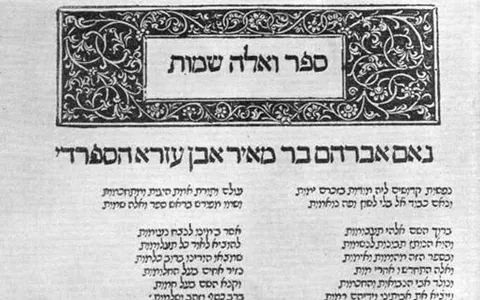
- Torah commentary, published in 1567.
- Kavanat HaTorah (“The Intentions of the Torah”), a preface to the commentary, published posthumously in 1567.
- Song of Songs and Ecclesiastes, the latter dedicated to Henry II of France.
- Psalms, published in 1586.
- Mishpat Tzedek (“Righteous Judgment”), on Job, published in 1589.
- Jonah, Habakkuk and Zechariah, published in 1724 together with Likutei Shoshanim by David ibn Chin.
Philosophy
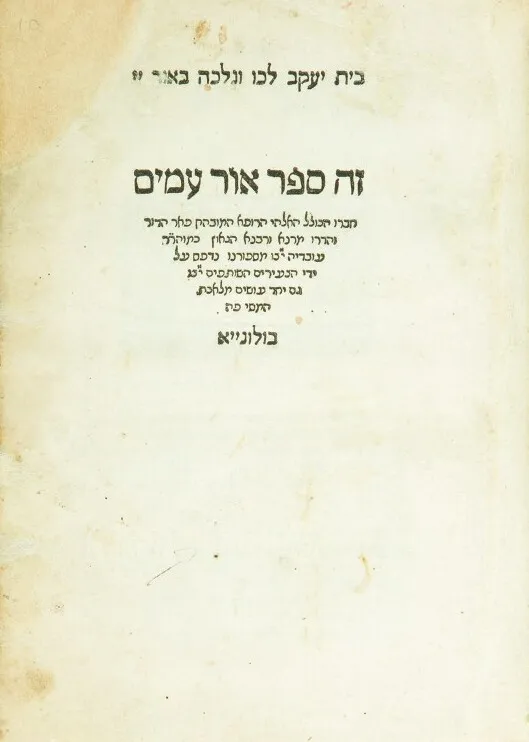
Or Amim (“Light of the Nations”), published in Bologna in 1537. It argues against Aristotle on the eternity of matter, divine omniscience and the universality of the soul. Sforno wrote it in part because Maimonides had accepted Aristotle’s positions on the sublunar world. He translated it into Latin and sent it to Henry II of France; the Latin edition appeared in 1548.
His method
He draws discerningly on earlier commentators (Rashi, Ibn Ezra, the Rashbam and the Ramban), and his own contributions reflect a strong philological ability.
Timeline
| Date | Event |
|---|---|
| c. 1470–1475 | Born in Cesena |
| 1498–1500 | Teaches Hebrew to Reuchlin in Rome |
| 1519 | Issues his ruling in the case of Donina Sarfati |
| c. 1525 | Leaves Rome and lives for a time as a wanderer |
| 1537 | Publishes Or Amim in Bologna |
| 1548 | The Latin edition of Or Amim appears |
| 1549–1550 | Dies in Bologna |
| 1567 | His Torah commentary is published |
Frequently asked questions
Who was Sforno?
An Italian physician, philosopher and commentator of the Renaissance, who left one of the Torah commentaries most appreciated for its clarity.
Whom did he teach Hebrew?
Johannes Reuchlin, one of the great German humanists, in Rome, between 1498 and 1500.
When did he die?
In 1549 or 1550, in Bologna. The sources give both dates.
Sources
- Obadiah ben Jacob Sforno, reference article (English Wikipedia) and the sources it cites