Rabbi Yehuda HaNasi (c. 135–217): biography and the editing of the Mishnah
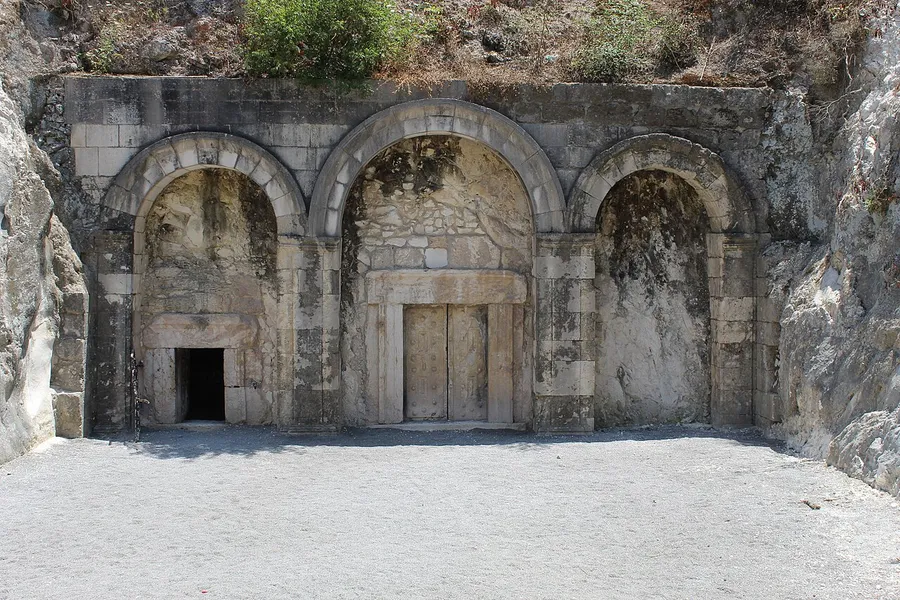
Rabbi Yehuda HaNasi (רבי יהודה הנשיא), “Yehuda the Prince,” known in the Talmud simply as Rabbi and also called “our holy teacher” (Rabbeinu HaKadosh), was the sage who compiled and edited the Mishnah. He was born around 135 and died around 217 in Tzippori, and was buried in Beit She’arim.
Quick facts
| Name | Rabbi Yehuda HaNasi, called “Rabbi” and “Rabbeinu HaKadosh” |
| Born | Around 135, in Judea (place unknown) |
| Died | Around 217, in Tzippori; buried in Beit She’arim, some 15 km away |
| Father | Rabban Shimon ben Gamliel II |
| Work | The editing of the Mishnah, with sixty-three tractates |
| Successor | His son Rabban Gamliel III |
Youth and teachers
He spent his youth in Usha, in Lower Galilee. He studied with several of the main disciples of Rabbi Akiva: Rabbi Yehuda bar Ilai, Rabbi Yose ben Chalafta, Rabbi Shimon bar Yochai, Rabbi Elazar ben Shamua and Rabbi Natan the Babylonian. He probably did not study with Rabbi Meir, although he considered it a privilege to have seen him. He was also taught by his father, with whom he sometimes disagreed. He knew koine Greek, which allowed him to act as an intermediary with the Roman authorities.
The nasi
Nasi was the title of the president of the Sanhedrin, and Rabbi Yehuda was the first to bear it permanently attached to his name. The Sanhedrin moved from Usha to Shefar’am, then to Beit She’arim, where he presided over it, and later to Tzippori, where he lived for at least seventeen years. He ordained disciples, recommended students for communal posts and issued rulings on the new moon, the Sabbatical year and tithes.
The sources describe his wealth, which reinforced his authority, his generosity during a famine and, at the same time, his austere personal life.
The Mishnah
He gathered the oral traditions into the Mishnah, a legal corpus of sixty-three tractates that is the basis of the Talmud. He is considered its editor, not its only author: it includes sayings of his son Gamliel III, and its structure follows the work of Rabbi Akiva and Rabbi Meir. Many of his own statements appear introduced with “Rabbi says.”
The date of 189 comes from a medieval chronicler, Rabbi Abraham ibn David, and is not an established fact.
“Antoninus”
The Talmud describes a close friendship between Rabbi and an emperor called Antoninus, who consulted him. The identity is disputed: Antoninus Pius, Marcus Aurelius and Caracalla have been proposed, and modern scholars have difficulty fitting the accounts into the Antonine period.
His death and burial
The date of his death is inferred indirectly, from the departure of his disciple Abba Arika around 219; another calculation gives around December 1, 217. It is told that his funeral procession stopped eighteen times to deliver eulogies. He was succeeded by his son Gamliel, and another son, Shimon, headed his yeshiva. He was buried in the necropolis of Beit She’arim.
Legends
- He was born, according to tradition, on the day Rabbi Akiva, the martyr, died.
- A midrash tells that his son Yaavetz ascended to heaven without dying.
- An account later than the Talmud says that his spirit visited his house on Friday nights for the kiddush.
These stories are transmitted as tradition.
Frequently asked questions
Why is he called simply “Rabbi”?
Because in the Mishnah he is called simply “Rabbi,” as the teacher par excellence.
Did he write the Mishnah?
He edited it and arranged it from the traditions of his predecessors, including those of the school of Rabbi Akiva. He is not its only author.
Who was Antoninus?
A Roman emperor, a friend of his according to the Talmud; his exact identity is disputed.
Sources
- Judah ha-Nasi, reference article (English Wikipedia) and the sources it cites