Hillel the Elder: biography, teachings and the House of Hillel
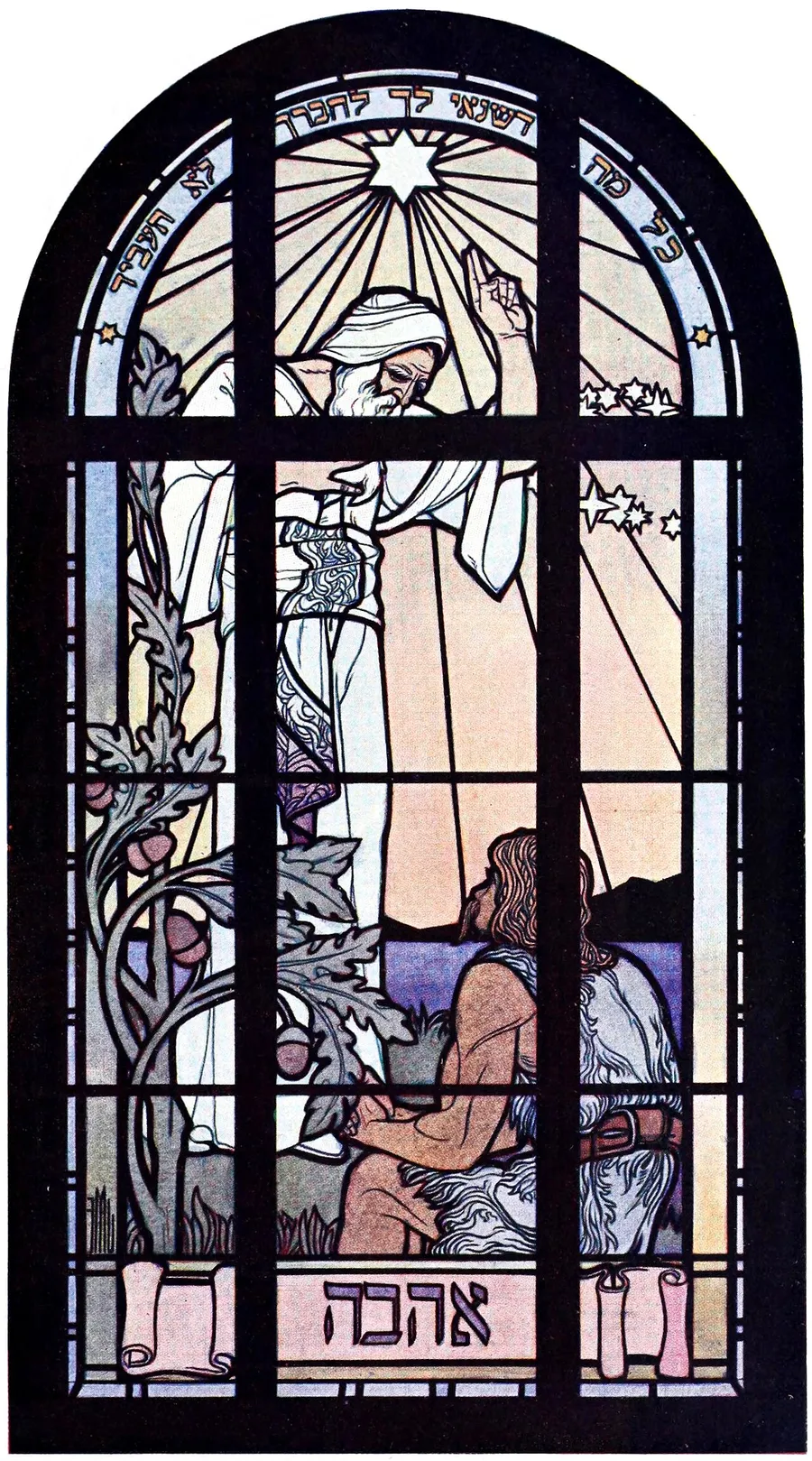
Hillel the Elder (הלל הזקן) was one of the great sages of the Second Temple period. He was born in Babylonia and settled in the Land of Israel, where he became the highest authority among the Pharisees and founded the school known as the House of Hillel. The dates of his life are approximate and even contradict one another; his death is usually placed around the year 10 of the Common Era.
Quick facts
| Name | Hillel, called “the Elder” (HaZaken) |
| Origin | Babylonia, in the Parthian Empire; later, the Land of Israel |
| Period | Late 1st century BCE and early 1st century CE. Dates are approximate |
| School | The House of Hillel, as opposed to the House of Shammai |
| Contributions | The seven rules of interpretation (middot) and the prozbul |
| Best-known saying | “If I am not for myself, who will be for me?” (Avot 1:14) |
Origin
He was born in Babylonia, in the Parthian Empire, and moved to the Land of Israel. One tradition makes him a descendant of David. He worked as a woodcutter while studying the Torah; his brother Shebna was a merchant.
A parallel with Moshe
The Sifre compares his life with that of Moshe: forty years before going to the Land of Israel, forty of study, and the last third as spiritual guide of the people. It is a literary pattern, not a verified chronology, and the same holds for the tradition that he lived a hundred and twenty years.
His leadership
He reached the highest authority among the Pharisees and headed an important school. According to the Talmud, the Bnei Bathyra yielded the office of nasi to him after a discussion on a question about sacrifices. The sources tell it this way, but the fact cannot be confirmed. The Jerusalem Talmud tells that he had eighty pairs of disciples; the greatest was Yonatan ben Uziel and the least, Rabban Yochanan ben Zakkai.
His legal work
- The seven rules: he is credited with having fixed the hermeneutic rules for interpreting the Midrash and Scripture, known as the “seven rules of Hillel.” Later systems, such as the thirteen rules of Rabbi Yishmael, rely on them.
- The prozbul: his best-known enactment allows the collection of loans despite the cancellation of debts in the Sabbatical year. The reason, according to the sources, was the “repair of the world” (tikkun olam), to protect both the lender and the borrower.
- Only a few rulings are attributed to him by name.
The House of Hillel and the House of Shammai
His disciples form the House of Hillel, and those of Shammai, the House of Shammai. Their discussions cover every branch of Jewish law. The sources contrast their characters: Shammai rejects a would-be convert, and Hillel receives him and teaches him patiently. Many of those anecdotes are traditional, not historical documents.
Famous sayings
- “If I am not for myself, who will be for me? And if I am only for myself, what am I? And if not now, when?” (Pirkei Avot 1:14).
- The golden rule: in an account in the Talmud (Shabbat 31a), he tells someone who wants to convert that the whole Torah consists in not doing to another what one hates, and that the rest is explanation.
- Loving peace: Pirkei Avot 1:12 presents him as a disciple of Aaron, a lover of peace and of people.
Some scholars note that certain sayings attributed to “Hillel” may come from other sages of the same name.
His descendants
His son Shimon ben Hillel appears in the tannaitic chain. His great-grandson, Rabban Shimon ben Gamliel I, is cited by Flavius Josephus as a member of a famous family. Rabbi Yehuda HaNasi, the editor of the Mishnah, traced his lineage back to Hillel: see his biography.
Frequently asked questions
What is the difference between the House of Hillel and the House of Shammai?
They were two schools with different approaches. The law is generally fixed according to the House of Hillel, which is described as more lenient.
What is the prozbul?
An enactment of his that allows the collection of debts despite the Sabbatical year.
What did he say about the Torah in a few words?
That the essential thing is not to do to another what one hates, and that the rest is commentary.
Sources
- Hillel the Elder, reference article (English Wikipedia) and the sources it cites
- Mishnah, Pirkei Avot 1:12–14; Babylonian Talmud, Shabbat 31a