Rabbi Yitzchak Luria, the Arizal (c. 1534–1572): biography, teachings and legacy
Rabbi Yitzchak Luria (יצחק לוריא), known as the Ari or the Arizal, was the great renewer of Kabbalah. He was born around 1534 in Jerusalem and died in Safed on the 5th of Av 5332 (July 25, 1572), at barely thirty-seven or thirty-eight years of age. He lived in Safed for less than three years, wrote almost nothing and yet his teaching transformed Jewish mysticism. This is due above all to Rabbi Chaim Vital, who put it in writing.
Quick facts
| Name | Rabbi Yitzchak (son of Shlomo) Luria. Known as the Ari or the Arizal |
| Born | Around 1534 (5294), in Jerusalem |
| Died | 5 Av 5332 (July 25, 1572), in Safed |
| Parents | An Ashkenazi father, Shlomo, and a Sephardic mother |
| Chief disciple | Rabbi Chaim Vital |
| Burial | Old cemetery of Safed |
The name
“Ari” (האר״י) is an acronym; the best-known reading is HaElohi Rabbi Yitzchak (“the divine Rabbi Yitzchak”), and the same acronym coincides with the word “lion.” “Arizal” adds the formula of blessed memory (zichrono livrachah). The traditional editions also call him HaAri HaKadosh, “the holy Ari.”
Childhood in Egypt
He was born in Jerusalem, to an Ashkenazi father and a Sephardic mother. His father died while he was still a child, and he was raised by his maternal uncle, Mordechai Francis, a wealthy tax collector of Cairo. Among his teachers is counted Rabbi David ibn Abi Zimra (the Radbaz), and another uncle, Rabbi Betzalel Ashkenazi, guided him in the study of rabbinic legal literature. At fifteen he married a cousin, the daughter of his uncle Mordechai.
Seven years by the Nile
Around the age of twenty-two he became absorbed in the study of the Zohar and lived in seclusion for seven years in an isolated house on the banks of the Nile. He visited his family only on Shabbat and, according to the accounts, did not speak even with his wife. This episode is transmitted by traditional sources, without independent corroboration.
Arrival in Safed
In 1569 he returned to the Jerusalem area and soon after settled in Safed, where he arrived, probably, in early 1570. The kabbalistic circle led by the Ramak was there. According to a later chronicler, he studied with him “for a very short time”: the Ramak died on the 23rd of Tammuz of that year.
The circle of disciples
After Cordovero’s death a circle of disciples formed around Luria, organized on two levels: beginners received an elementary Kabbalah and the initiated, his secret teachings, together with the formulas and the intentions for prayer. Among his disciples were:
- Rabbi Chaim Vital, the best known and the main defender and transmitter of the system; he gathered the disciples’ notes.
- Rabbi Yisrael Sarug, Rabbi Shmuel de Uceda and Rabbi Yosef ibn Tabul.
The relationship with Vital lasted less than two years. According to the Sefer HaChezyonot, the Ari told him that he had come into the world only to teach him: see the biography of Rabbi Chaim Vital.
His teaching
The Ari transmitted his teaching orally. Among his central ideas, which the disciples gathered afterward, is the tzimtzum (the “contraction”), with which he describes how the Ein Sof withdrew to make room for creation. His teaching on exile proved consoling to the Jews who were arriving in the region awaiting the Messiah.
The system he formulated is known as Lurianic Kabbalah. In later tradition it is associated with three notions: the tzimtzum, the breaking of the vessels (shevirat hakelim) and repair (tikkun) as the task of man.
What he wrote himself
He wrote very little. Some poems are attributed to him, among them songs in Aramaic for the Shabbat table, such as Azamer Bishvachin. Almost all of his teaching came down through the notebooks of his disciples, and above all through those of Rabbi Chaim Vital. From this arose the work known as Etz Chaim.
His death
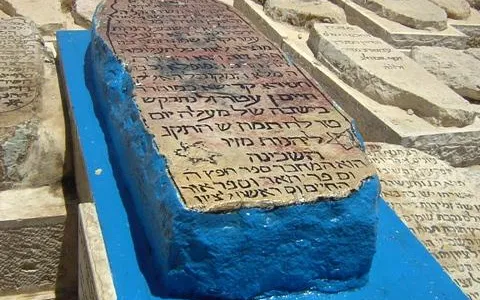
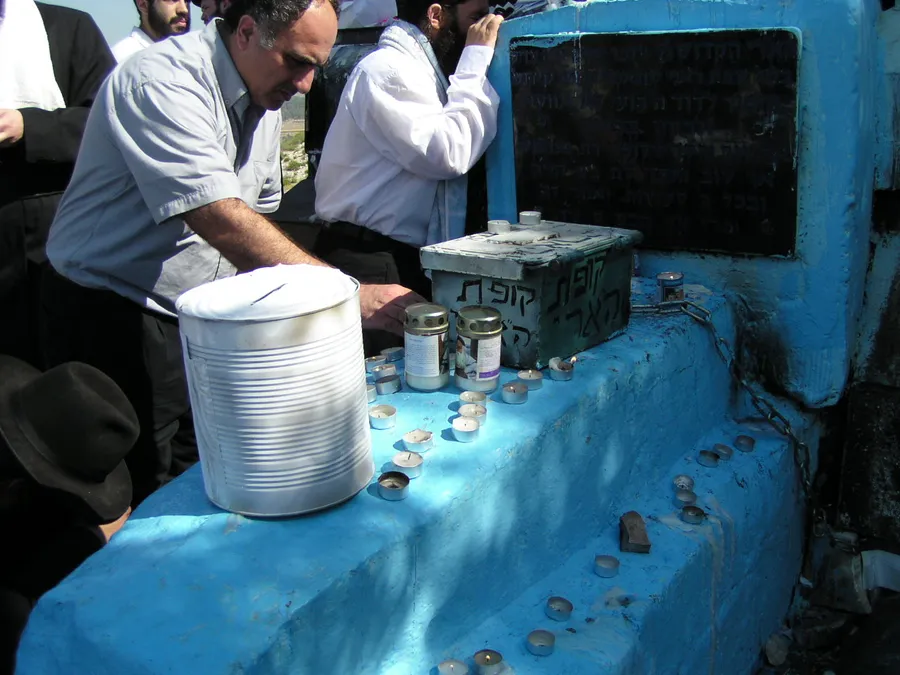
He died in Safed on the 5th of Av 5332 (July 25, 1572) and was buried in the old cemetery of the city. According to the biography of Rabbi Chaim Vital, he died in an epidemic. In his memory the Ari Ashkenazi Synagogue of Safed was built, at the end of the 16th century.
What is history and what is legend
Some traditional accounts accompany his figure: that the prophet Eliyahu guided him to the unmarked graves of the sages, or that the soul of his disciple Vital had not been touched by the sin of Adam. These are accounts of the tradition, not facts that can be verified.
Timeline
| Date | Event |
|---|---|
| c. 1534 (5294) | Born in Jerusalem |
| c. 1549 | Marries a cousin |
| c. 1556 | Withdraws to the Nile for seven years |
| 1569 | Returns to the Jerusalem region and moves to Safed |
| 1570 | Arrives in Safed (early in the year); the Ramak dies; his circle forms |
| 1572 (5332) | Dies in Safed, on 5 Av |
Frequently asked questions
Who was the Arizal?
Rabbi Yitzchak Luria, the great renewer of Kabbalah in 16th-century Safed. He died young and left almost nothing written; his teaching was transmitted by Rabbi Chaim Vital.
How long did he live in Safed?
Less than three years, from early 1570 until his death in 1572.
What did he leave in writing?
Very little: some poems, among them songs for the Shabbat table. His teaching is preserved above all in the writings of Rabbi Chaim Vital.
Why is he so important?
Because his system, Lurianic Kabbalah, became the dominant form of Kabbalah in the following centuries and had great influence on Hasidism.
Sources
- Isaac Luria, reference article (English Wikipedia) and the sources it cites
- Moses ben Jacob Cordovero, reference article (English Wikipedia)
- Biography “Rabbi Chaim Vital (1542–1620)” in The Gates of Holiness, Ancient Gate Press, 2026