Rabbi Moshe Cordovero, the Ramak (1522–1570): biography, works and legacy
Rabbi Moshe ben Yaakov Cordovero (משה קורדובירו), known by the acronym Ramak, was the great systematizer of Kabbalah in 16th-century Safed. He was born in 1522 and died in Safed in 1570, at forty-seven or forty-eight years of age. Before the Arizal arrived, he was the principal master of the city’s kabbalistic circle, and his work Pardes Rimonim was the first to order, systematically, the world of ideas of the Zohar and of earlier kabbalists.
Quick facts
| Name | Rabbi Moshe ben Yaakov Cordovero. Acronym: Ramak (הרמ״ק) |
| Born | 1522. Whether in Safed or whether he reached it as a young man is disputed |
| Died | 23 Tammuz 5330 (June 1570), in Safed |
| Teachers | Rabbi Shlomo Alkabetz (Kabbalah); Rabbi Moshe di Trani and, according to some sources, Rabbi Yosef Karo (Halacha) |
| Disciples | Rabbi Eliyahu de Vidas, Rabbi Chaim Vital and others |
| Main works | Pardes Rimonim, Or Yakar, Tomer Devorah, Or Ne’erav, Elimah Rabbati |
A name that points to Spain or Portugal
The surname Cordovero suggests a family from Córdoba, and it has been thought that he descended from exiles of the expulsion of 1492. However, his signature in Hebrew, “Cordoeiro,” points to a prolonged residence in Portugal. The sources present both possibilities without resolving them. Nor is it clear whether he was born in Safed or arrived in the city as a child.
The Safed of his youth
In the 16th century Safed, a small city in Galilee, gathered some of the greatest sages in Jewish history. There Rabbi Yosef Karo wrote the Shulchan Aruch, Rabbi Moshe Alshich preached, and in the field of Kabbalah, the Ramak became the reference figure.
The meeting with Alkabetz
His teacher of Kabbalah was Rabbi Shlomo Alkabetz, the author of the hymn Lecha Dodi, who was also his brother-in-law: the Ramak married a sister of Alkabetz, whose name has not been preserved. In the introduction to Pardes Rimonim, Cordovero himself tells that, around 1542, at about twenty, a heavenly voice encouraged him to study Kabbalah with him. This is his personal testimony, not a fact documented by other sources.
On rabbinic ordination
A widespread belief holds that he received ordination (semichah) from Rabbi Yaakov Berav in 1538. Studies say this was not so: those who did receive it were Rabbi Yosef Karo, Rabbi Moshe di Trani, Rabbi Yosef Sagis and Rabbi Moshe Alshich.
A master in Safed
The Ramak headed the yeshiva of the Portuguese immigrants in Safed and around 1550 founded an academy of Kabbalah which he directed for some twenty years. Among his disciples are:
- Rabbi Eliyahu de Vidas, author of Reshit Chochmah, one of the great works of kabbalistic ethics.
- Rabbi Chaim Vital, who years later would be the Arizal’s chief disciple and the transmitter of his teaching.
His son Gedaliah (1562–1625) published several works of his father in Venice, between 1584 and 1587, and later settled in Jerusalem.
His works
Pardes Rimonim
His early work, Pardes Rimonim (“Orchard of Pomegranates,” a title taken from Song of Songs 4:13), he began around 1542 and finished in 1548. It is a systematic exposition of Kabbalah, with numerous diagrams, which brings together the earlier schools and arranges them in language close to philosophy.
Or Yakar
His most extensive work is Or Yakar, a monumental commentary on the Zohar, the Sefer Yetzirah and other texts, on which he worked all his life. It has been published in a modern edition in Jerusalem; the number of volumes varies according to the source (around sixteen).
Tomer Devorah
Tomer Devorah (“The Palm Tree of Devorah”) is a small ethical treatise that proposes a life of imitation of the divine attributes. It is probably his most widely read work today. It has its own article.
Other works
- Or Ne’erav: a defense of the study of Kabbalah, which introduces the methods of Pardes Rimonim.
- Elimah Rabbati: an abstract treatise on the Divinity and the sefirot; about two thirds remain unpublished.
- Sefer Gerushin: a short devotional work that reflects his asceticism and his piety.
Part of his writings remains in manuscript, and references in the surviving works suggest that others were lost.
His thought
The Ramak integrated earlier kabbalistic schools into a single systematic framework, from the Ein Sof (the Infinite) to the finite. He was inspired by the imagery of the Zohar but arranged it rationally, in language that owes something to Jewish philosophy and to Maimonides. Scholars note that his system describes above all the world prior to repair (Tohu), and that the Kabbalah of the Arizal later recast that scheme as the world of repair (Tikkun).
His death and the transmission
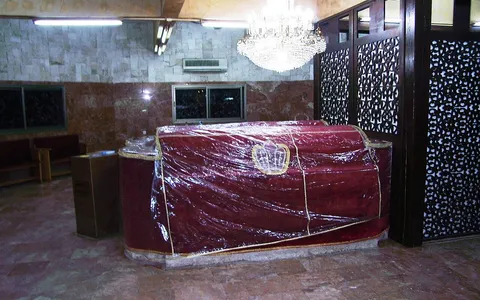
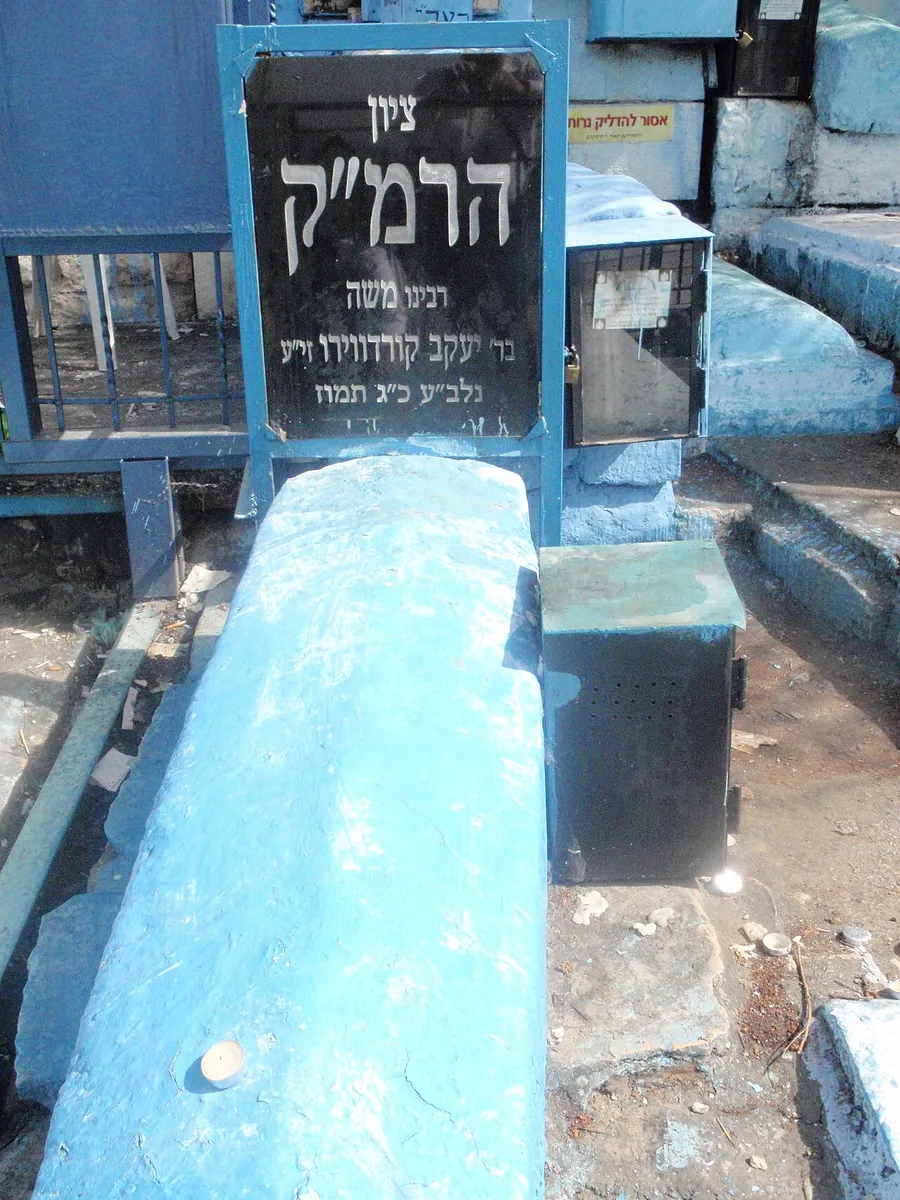
He died in Safed in 1570 and was buried in the old cemetery of the city. Tradition tells that the Arizal arrived in Safed on the very day of his funeral and saw a pillar of fire over the procession. It is a traditional account, not a documented fact.
What is historical is the sequence: the Arizal arrived in Safed in early 1570, the Ramak died that year, and a circle of disciples formed around the newcomer. Rabbi Chaim Vital, who had studied with the Ramak, became his chief disciple. For the full account, see the biography of Rabbi Chaim Vital.
Timeline
| Date | Event |
|---|---|
| 1522 | Cordovero is born |
| c. 1542 | According to his own account, he begins to study Kabbalah with Alkabetz and starts Pardes Rimonim |
| 1548 | Finishes Pardes Rimonim |
| c. 1550 | Founds an academy of Kabbalah in Safed, which he directs for some twenty years |
| 1562 | His son Gedaliah is born |
| 1570 | Dies in Safed, on 23 Tammuz; the Arizal arrives |
| 1584–1587 | His son Gedaliah publishes several of his works in Venice |
| 1588 | First edition of Tomer Devorah, in Venice |
Frequently asked questions
What does Ramak mean?
It is the acronym of Rabbi Moshe Cordovero (הרמ״ק).
Was he a teacher of the Arizal?
Not in a full sense. According to a late source, the Arizal studied with him “for a very short time” after arriving in Safed. The Ramak died in 1570, months after the Arizal’s arrival.
What is his most important work?
Pardes Rimonim is the most systematic and one of the foundational works of Kabbalah. Or Yakar, his commentary on the Zohar, is the most extensive. Tomer Devorah is the most widely read today.
Why is he considered a systematizer?
Because he brought earlier kabbalistic ideas, often scattered, into an orderly scheme, with his own vocabulary, without giving up the imagery of the Zohar.
Sources
- Moses ben Jacob Cordovero, reference article (English Wikipedia) and the sources it cites
- Isaac Luria, reference article (English Wikipedia), for the relationship with Cordovero
- Rabbi Moshe Cordovero, Pardes Rimonim, introduction (his own account of 1542)
- Biography “Rabbi Chaim Vital (1542–1620)” in The Gates of Holiness, Ancient Gate Press, 2026