
The Zohar: what it is, structure, authorship and how it is studied
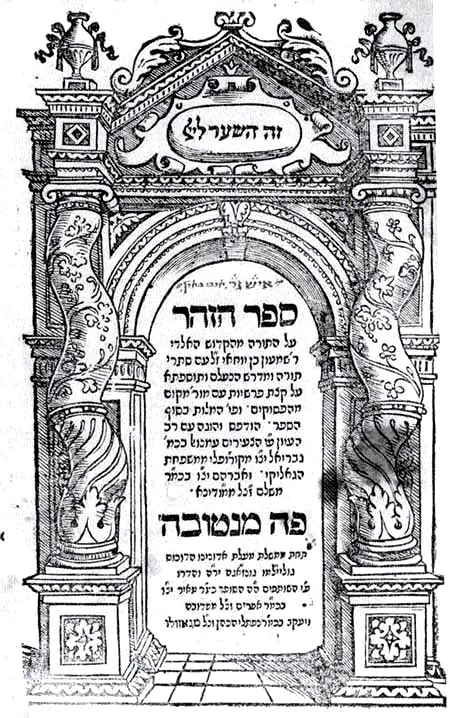
The Zohar (זוהר), “the Splendor” or “the Radiance,” is the foundational work of Kabbalah. It is a collection of books that comments on the mystical aspects of the Torah and deals with cosmogony and mystical psychology. It is written in Aramaic and tradition attributes it to Rabbi Shimon bar Yochai, of the 2nd century.
Quick facts
| Title | Zohar (“Splendor, Radiance”) |
| Language | Aramaic (with the Midrash HaNe’elam in Hebrew) |
| Traditional attribution | Rabbi Shimon bar Yochai (2nd century) |
| Academic attribution | Rabbi Moshe de León (c. 1240–1305), around 1280–1286 |
| First editions | Cremona, 1558; Mantua, 1558–1560 |
| Genre | Mystical commentary on the Torah |
The language
The Aramaic of the Zohar is, according to Gershom Scholem and other scholars, an artificial form, based above all on the Babylonian Talmud and on Targum Onkelos, with grammatical errors and loanwords. The first kabbalists cited a text that was partly Hebrew; the first edition, of 1558, was entirely Aramaic, except for the Midrash HaNe’elam, which uses Hebrew.
Structure
The Zohar is not a single book but a collection. Scholem divides it into twenty-one sections. Among the main ones:
- The commentary on the Torah, which makes up the bulk of the text.
- Sifra DiTzeniuta (“Book of Concealment”): a brief commentary on the first six chapters of Genesis.
- Idra Rabba (“The Great Assembly”) and Idra Zuta (“The Small Assembly”): gatherings of sages in which Kabbalah is discussed.
- Raaya Mehemna (“The Faithful Shepherd”): the largest of the later additions.
- Tikkunei HaZohar (“Repairs of the Zohar”), with seventy commentaries plus eleven additional ones; it was first printed in Mantua, in 1557.
- Zohar Chadash (“New Zohar”), with material from manuscripts discovered later.
Who wrote it?
The tradition
Tradition attributes it to Rabbi Shimon bar Yochai and his circle, in the 2nd century. Authorities such as Rabbi Yosef Karo, Rabbi Moshe Feinstein and Rabbi Ovadia Yosef accepted it as ancient.
Academic research
Since Gershom Scholem (1938), most scholars attribute it to Rabbi Moshe de León, around 1280–1286, in Castile. This thesis is widely held, but it is not accepted without criticism, and some defend several medieval authors or a small ancient core. The testimony of Rabbi Yitzchak of Acre, who tells that the widow and the daughter of Moshe de León acknowledged that he had written it, was censored in the 1580 edition and restored in 1857.
Other rabbis rejected its antiquity, such as Rabbi Yaakov Emden, Rabbi Shmuel David Luzzatto and Rabbi Yechezkel Landau. Religious positions remain divided.
Its place in Judaism
By the 15th century it already had remarkable authority among the Jews of Iberia and was cited in legal discussions. Its defenders praised its emphasis on inner devotion and its role in the renewal of prayer. Its critics said it encouraged superstition and displaced traditional rabbinic Judaism. It also had great influence on Christian Kabbalah.
Main commentaries
- Ketem Paz, by Rabbi Shimon Labi, of Libya, the first known commentary.
- Or Yakar, by Rabbi Moshe Cordovero, the Ramak (about twenty-two volumes in the edition cited by the source).
- A commentary by the Vilna Gaon.
- Ateret Tzvi, by Rabbi Tzvi Hirsh of Zidichov.
- Sulam, by Rabbi Yehuda Ashlag.
- Masok MiDvash, a Hebrew translation by Rabbi Daniel Frisch.
Frequently asked questions
What does Zohar mean?
“Splendor” or “Radiance.”
In what language is it written?
In Aramaic, with parts in Hebrew.
Who wrote it?
According to tradition, Rabbi Shimon bar Yochai; according to most academic research, Rabbi Moshe de León in the 13th century.
When was it printed?
The first editions are from 1558, in Cremona and Mantua.
Sources
- Zohar, reference article (English Wikipedia) and the sources it cites
- Shimon bar Yochai, reference article (English Wikipedia)