
Maimonides’ Mishneh Torah: what it is, structure and how it is organized
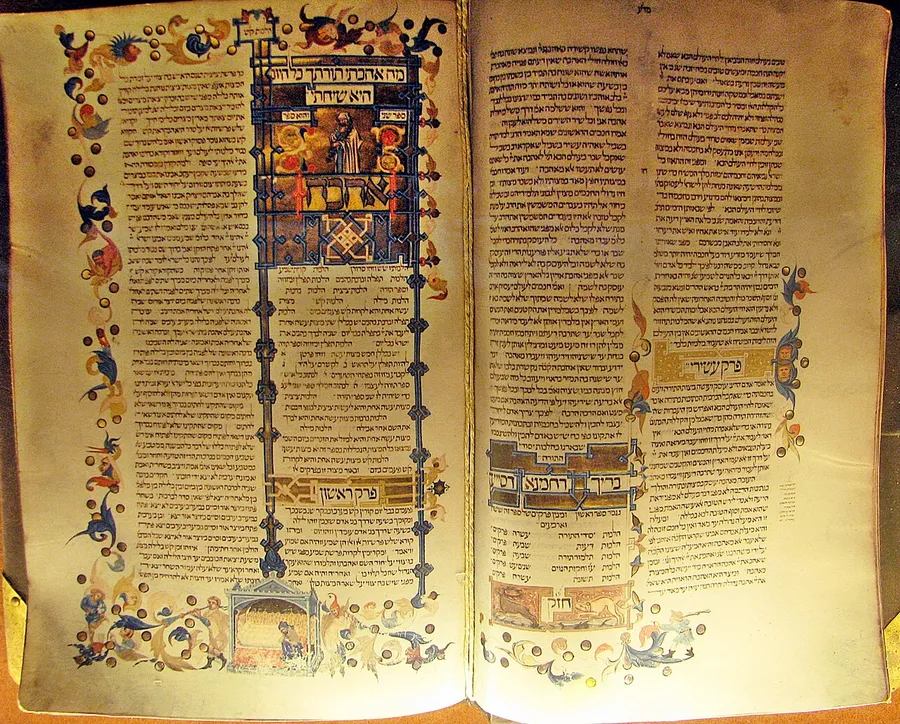
The Mishneh Torah (משנה תורה), also called Yad HaChazakah (“the strong hand”), is the code of Jewish law that Maimonides wrote in Hebrew, in Egypt, between 1170 and 1180. It is considered his magnum opus.
Quick facts
| Author | Rabbi Moshe ben Maimon (Maimonides, the Rambam) |
| Composed | 1170–1180, in Egypt |
| Language | Hebrew |
| Structure | Fourteen books, with about a thousand chapters |
| Other name | Yad HaChazakah: yad has the numerical value 14 |
| First edition | In Rome, between 1473 and 1480 (date and place disputed) |
The fourteen books
- Madda (Knowledge)
- Ahavah (Love)
- Zemanim (Times)
- Nashim (Women)
- Kedushah (Holiness)
- Haflaah (Separation)
- Zeraim (Seeds)
- Avodah (Divine service)
- Korbanot (Offerings)
- Taharah (Ritual purity)
- Nezikin (Damages)
- Kinyan (Acquisition)
- Mishpatim (Civil laws)
- Shoftim (Judges)
How it is organized
Maimonides sought brevity and, in general, did not give the sources: he names them only in the preface. He drew on the Torah, the Tanakh, both Talmuds, the Tosefta, the halachic midrashim (above all the Sifra and the Sifre) and the responsa of the geonim. The source says that the order of the chapters follows the subject matter and not the underlying legal principles, and that he later regretted not having added the sources, although he never had the time to do so.
The controversy
Objections arose shortly after its publication: the lack of sources and the fear that it would replace the study of the Talmud. The most influential critic is Rabbi Abraham ben David of Posquières (the Raavad), whose remarks are printed alongside almost all editions. His new arrangement was also objected to, as were some rulings that followed the Tosefta or the Jerusalem Talmud rather than the Babylonian. Maimonides answered that he never meant to do away with the study of the Talmud and that he omitted the sources for brevity. Rabbeinu Yonah of Gerona was counted among his first opponents.
Its influence and its commentaries
According to the source, Eastern Jews generally followed Maimonides, while Ashkenazim usually preferred the Rosh when they disagreed. The main commentaries are the Maggid Mishneh (Vidal of Tolosa), the Kesef Mishneh (Rabbi Yosef Karo), the Lechem Mishneh (Abraham di Boton) and the Hagahot Maimuniyot (Meir HaKohen). Karo’s Shulchan Aruch and the Arbaah Turim of Rabbi Yaakov ben Asher rely heavily on it: see the guide to the Shulchan Aruch.
Printing
The editio princeps was printed in Italy, probably in Rome, between 1473 and 1480; there is uncertainty about the date, the place and the printers. The second Italian edition, by Gershom Soncino, was completed on March 23, 1490. In the 15th century it was printed at least six times: four on the Iberian Peninsula and two in Italy.
Frequently asked questions
Why is it called Yad HaChazakah?
Because yad (“hand”) equals 14 in gematria, the number of books.
Why does it not cite its sources?
For brevity, according to Maimonides himself.
Who criticized it?
Above all the Raavad, whose glosses appear printed with the work.
Sources
- Mishneh Torah, reference article (English Wikipedia) and the sources it cites
- Cross-checking of editions: Library of Congress, Sotheby’s and Kestenbaum catalogs