
The Shulchan Aruch of Rabbi Yosef Karo: what it is, structure and how it is used
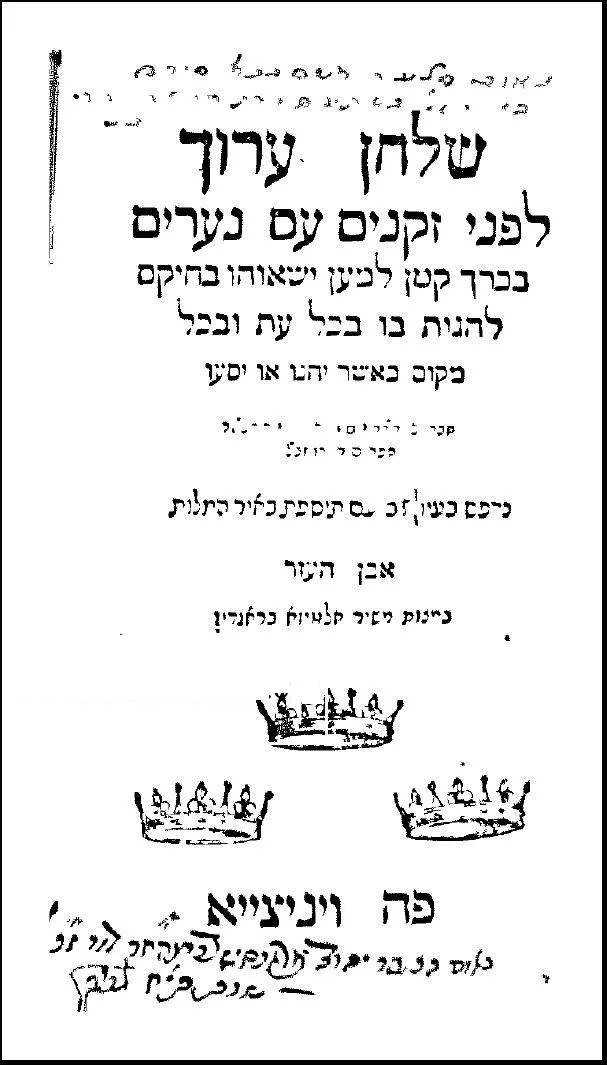
The Shulchan Aruch (שולחן ערוך), “the set table,” is the code of Jewish law that Rabbi Yosef Karo wrote in Safed and that was published in Venice in 1565. Together with the glosses of Rabbi Moshe Isserles, the Rema, it became the code accepted by most of the Jewish world.
Quick facts
| Author | Rabbi Yosef Karo |
| Written in | Safed; finished in 1563 |
| Published | Venice, 1565 |
| Structure | Four parts: Orach Chaim, Yoreh Deah, Even HaEzer and Choshen Mishpat |
| Basis | The Beit Yosef, the author’s own commentary on the Arbaah Turim |
| Ashkenazi glosses | The Mappah, by the Rema; Kraków, around 1571 |
How it was built
It is to a large extent a codification of the rulings of his Beit Yosef, although it also contains rulings that do not appear in it, drawn from books that Karo read afterward. It follows the structure of the Arbaah Turim of Rabbi Yaakov ben Asher, but more concisely and without citing sources.
Karo adopted as a rule the rulings of Alfasi, Maimonides and the Rosh (Rabbi Asher ben Yechiel), and accepted as authoritative the opinion of two of the three, with exceptions.
The Mappah
Rabbi Moshe Isserles wrote glosses that indicate where Ashkenazi custom differs from what the text, of Sephardic orientation, says. They are called the Mappah (“the tablecloth”). Most sources date its first appearance to a Kraków edition of 1571; others give 1569–1571. Since 1578, almost all editions include them: see the biography of the Rema.
Acceptance and criticism
The source tells that Karo had a modest opinion of the work and wrote it with young students in mind. It became the standard code for ritual and legal questions. The Ashkenazim accepted it together with the Rema’s glosses. His contemporaries criticized it: Rabbi Yom Tov Zahalon called it a book “for children and the ignorant,” and the Maharal, the Maharsha and the Bach objected that rulings were being made by the code without knowing its talmudic sources.
Sephardim and Ashkenazim
Its rulings generally follow Sephardic law and customs. The Ashkenazim generally follow the Rema where the two differ.
Main commentaries
- Siftei Kohen (the Shach), by Rabbi Shabtai HaKohen: on Yoreh Deah and Choshen Mishpat.
- Turei Zahav (the Taz), by Rabbi David HaLevi Segal: on Orach Chaim, Yoreh Deah and Even HaEzer.
- Magen Avraham, by Rabbi Avraham Gombiner: on Orach Chaim.
- Mishnah Berurah, by the Chofetz Chaim: a later compilation of the authorities on Orach Chaim. See his biography.
- Kitzur Shulchan Aruch, by Rabbi Shlomo Ganzfried: an independent summary.
Frequently asked questions
What does Shulchan Aruch mean?
“The set table.”
What are its four parts?
Orach Chaim (daily life and the festivals), Yoreh Deah (food and other laws), Even HaEzer (marriage and family) and Choshen Mishpat (civil law).
What is the Mappah?
The Rema’s glosses that add the Ashkenazi customs.
Sources
- Shulchan Aruch, reference article (English Wikipedia) and the sources it cites
- Cross-checking of the date of the Mappah: Britannica and Jewish Encyclopedia, “Isserles”; YIVO Encyclopedia