The Rema, Rabbi Moshe Isserles (1530–1572): biography, the Mappah and legacy
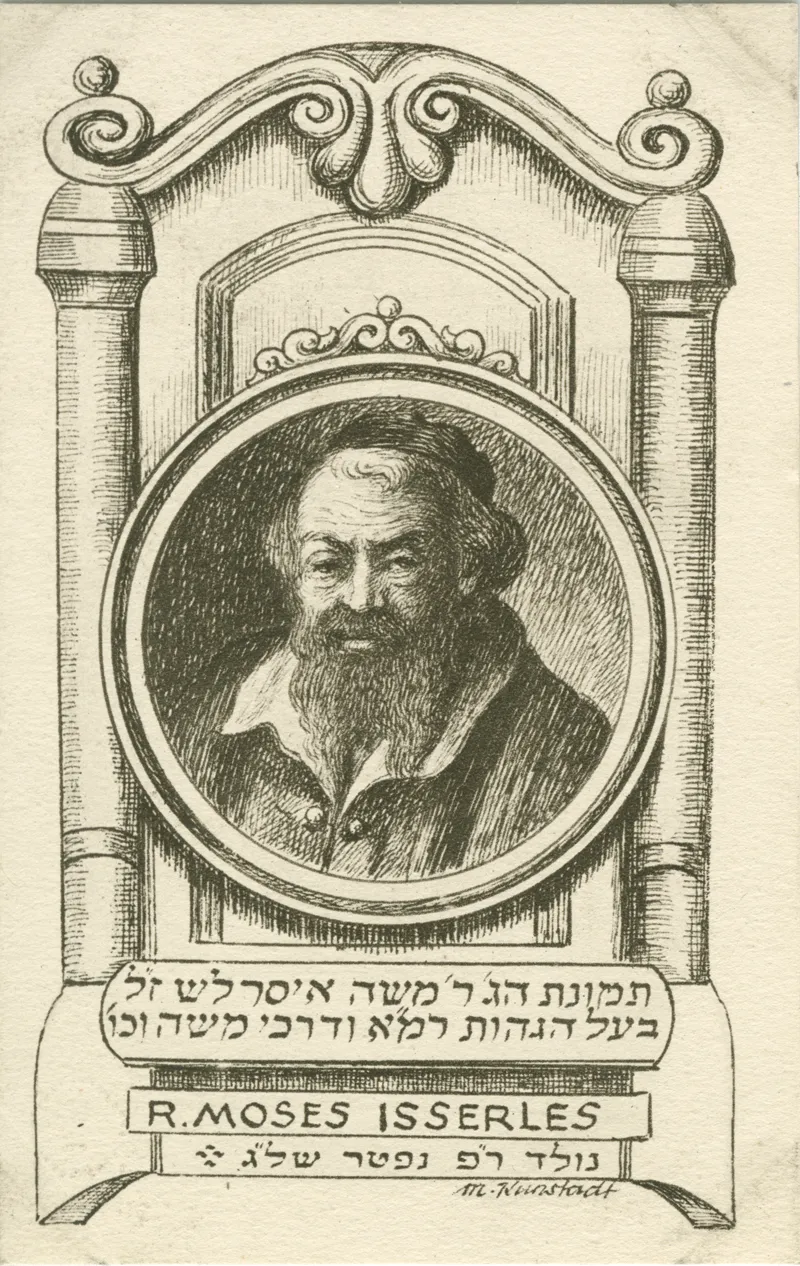
Rabbi Moshe ben Israel Isserles (משה איסרלש), the Rema, was the great authority on Halacha of 16th-century Ashkenazi Judaism. He was born on February 22, 1530 in Kraków and died there in 1572; the source gives May 10 or 11, which is the 18th of Iyar 5332. His glosses on the Shulchan Aruch, the Mappah, adapted the work of Rabbi Yosef Karo to Ashkenazi customs.
Quick facts
| Name | Rabbi Moshe ben Israel Isserles. Acronym: Rema |
| Born | February 22, 1530, in Kraków |
| Died | 18 Iyar 5332 (May 1572), in Kraków |
| Teacher and father-in-law | Rabbi Shalom Shachna, of Lublin |
| Works | Mappah, Darkei Moshe, Torat HaOlah, responsa |
Family and education
He was the son of Israel ben Yosef (Isserl), a wealthy talmudist who probably presided over the community of Kraków, and a grandson of Rabbi Yechiel Luria. He studied in Lublin with Rabbi Shalom Shachna, who later became his father-in-law; Rabbi Shlomo Luria, the Maharshal, was a fellow student of his and later a critic of some rulings. His first wife died young, and in her memory he founded the synagogue of Kraków that bears his name. He later married the sister of Rabbi Yosef ben Mordechai Gershon HaKohen.
His career
He returned to Kraków in 1549 and founded a large yeshiva. In 1553 he was appointed judge (dayan). Other rabbis, among them Rabbi Yosef Karo, requested his rulings. He was consulted in the Bragadin-Giustiniani dispute, one of the first cases of copyright over a book.
His works
- Mappah (“The Tablecloth”): glosses on the Shulchan Aruch of Rabbi Yosef Karo, with Ashkenazi customs. Since 1578, most editions include them, and the two works together became the accepted code of law: see the biography of Karo.
- Darkei Moshe: a commentary on the Tur and the Beit Yosef.
- Torat HaOlah (c. 1560–1570): on the Temple and the sacrifices, which connects concepts of the Torah with philosophy, astronomy and Kabbalah.
- Responsa, Torat HaChatat (laws of food) and Mechir Yayin, a commentary on Esther.
- Aderet Eliyahu, a commentary on the Zohar, of which only the portion on Bereshit survives.
His approach
He respected minhag, but abandoned it if its basis seemed weak to him. He usually followed the majority of authorities and sometimes disagreed with Maimonides when the latter was in the minority. He held a moderate position on philosophy, which in his view should be studied only occasionally.
His burial
He is buried beside his synagogue, in the Remuh cemetery of Kraków. Until the Second World War, thousands of pilgrims visited his grave each Lag BaOmer, the day of his yahrtzeit. His tombstone compares him to Moshe, and a similar phrase was applied to Maimonides.
Legends
Tradition attributes to him Davidic descent, through Rashi; the source marks it as legendary. Other claimed kinships, with Mendelssohn or Meyerbeer, appear as “citation needed.”
Frequently asked questions
What is the Mappah?
The Rema’s glosses on the Shulchan Aruch, which add Ashkenazi customs to Karo’s work.
What does Rema mean?
It is the acronym of Rabbi Moshe Isserles (רמ״א).
Where is he buried?
In the Remuh cemetery of Kraków, next to the synagogue he founded.
Sources
- Moses Isserles, reference article (English Wikipedia) and the sources it cites